3D ANIMATION FOR REAL ESTATE DEVELOPMENTS THAT SELL OFF-PLAN

3D animation

We don’t make videos just to make a development “look good.”
We create them so that the buyer understands the value of what you’re selling,
imagines themselves living there, and arrives at the sales conversation with fewer doubts.

An image can spark interest.

A good video does something more challenging: it places the buyer inside the development before they even visit.

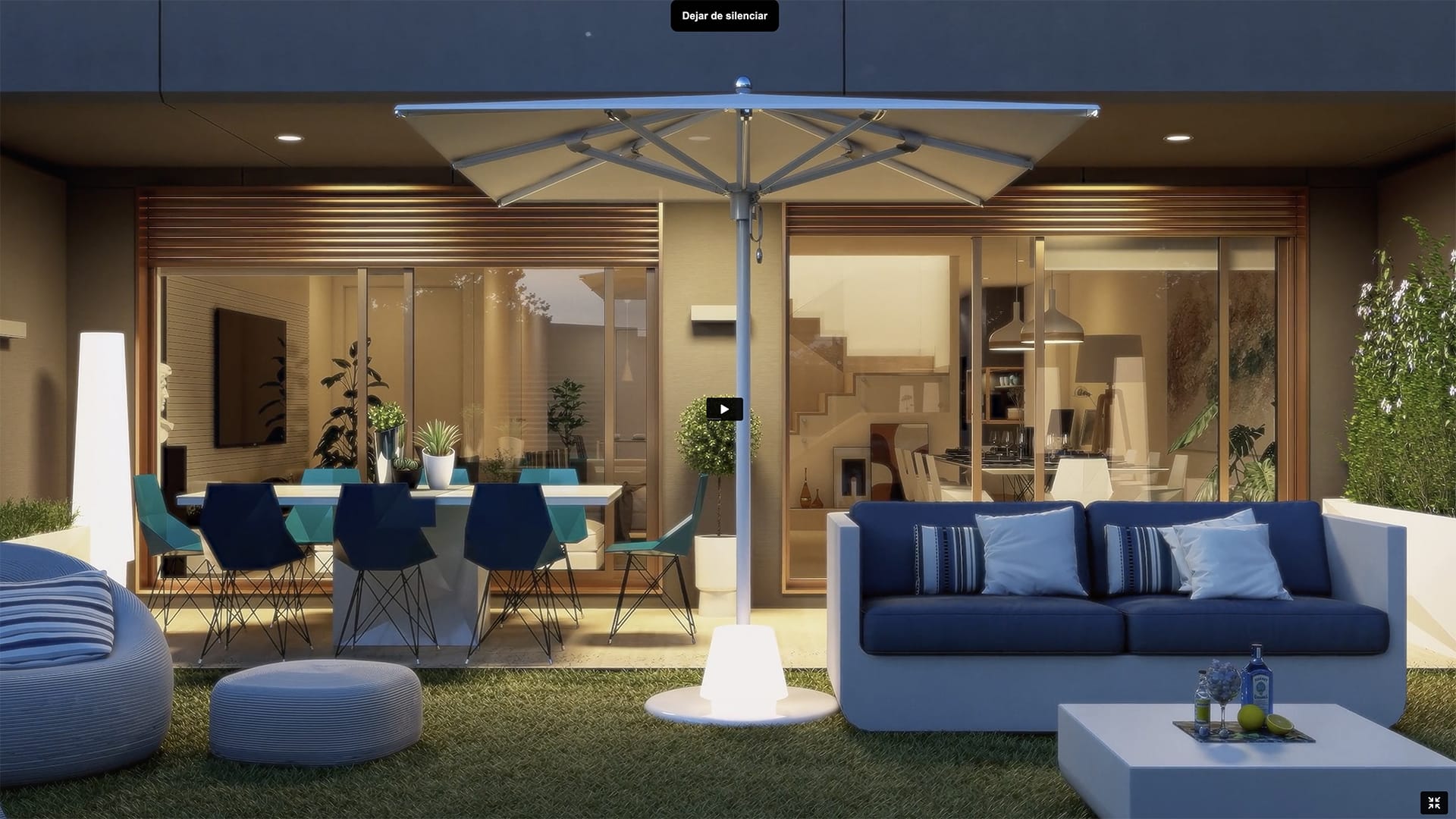
It shows them the layout, the lighting, the scale, the views, the flow, the communal areas, and the lifestyle.

And, above all, it helps them answer one question:

“Can I see myself living here?”

If the answer is yes, many doubts fade away.

There are fewer objections.
Fewer unproductive viewings.
Fewer weeks of indecision.

The buyer stops viewing the development as just another option and starts imagining themselves living there.

That is the job of the video:

to turn a development that doesn’t yet exist into a decision that is starting to feel real.

When you want to accelerate sales and/or raise prices.

When you need the buyer to understand the development before visiting it.

When a single image isn’t enough to convey the experience of living there.

When you want to showcase flow, rhythm, scale, light, views, communal areas, or the relationship between spaces.

When the sales team needs a powerful tool to present, advertise, or effectively champion the development.

When you want the buyer not just to see a home, but to imagine a life within it.

What no data, plan, or price can do for you.

A well-crafted video helps the buyer:

  • grasp the project sooner

  • better visualize what living there would be like
    remember the development over other options

  • arrive at the viewing with fewer questions

  • perceive greater value before discussing price

It does not replace the sales process.

It prepares the way for it.

With a system you haven’t seen anywhere else. Because it’s ours.

We don’t start by moving a camera.

We start by understanding what your development needs to sell.

We analyze what the buyer needs to feel, understand, and remember.

Then, we determine the route, pacing, scenes, viewpoints, lighting, music, duration, and level of detail.

The video isn’t just a series of beautiful shots.

It is a way of structuring the experience to guide the buyer forward.

Because we don’t sell videos. We accelerate purchasing decisions.

Because we have spent 37 years representing developments before they even exist.

Because we know when a camera should move and when it should stay still.

Because we don’t make videos to show everything.

We make videos to show what matters.

And because every decision—path, lighting, pacing, framing, music, and duration—must serve one purpose:

helping to sell more effectively.

Selected 3D animations

As you can imagine, after three decades doing this kind of work, we could show you many examples, but honestly,
I don’t think seeing more and more examples would add anything meaningful.

We’ve done all kinds of projects. From the visualization of the Zaragoza Expo to an exclusive single-family home, including very large, medium, and small developments. We’ve collaborated with some very important studios and others that weren’t as prominent, in Spain and the US, but believe me, that’s irrelevant.

What’s important is that all that accumulated experience allows us to offer you the best service for your next project.

Here you will see some recent, representative projects.

They were not chosen solely for their aesthetics.

They were selected because they demonstrate different ways of solving a commercial challenge:

showcasing a development, making it more desirable, better explaining its spaces,
or helping the buyer imagine themselves living there.

Selected 3D animations

As you can imagine, after three decades doing this kind of work, we could show you many examples, but honestly,
I don’t think seeing more and more examples would add anything meaningful.

We’ve done all kinds of projects. From the visualization of the Zaragoza Expo to an exclusive single-family home, including very large, medium, and small developments. We’ve collaborated with some very important studios and others that weren’t as prominent, in Spain and the US, but believe me, that’s irrelevant.

What’s important is that all that accumulated experience allows us to offer you the best service for your next project.

Archive

Testimonials

Testimonials

Frequently Asked Questions

These FAQs on images address the most common questions from clients who work with us.

Other queries can also be resolved by reading the testimonials

Images are excellent for focusing on specific moments in the sales process; video adds a sense of movement, rhythm, the relationship between spaces, and an experience that feels much more like actually stepping into the development.

A video needs to add something; it shouldn’t just be a repetition of the images set to music.

How spaces relate to one another. The transition from outside to inside, stepping out onto the terrace, the flow between the kitchen and the living room, the relationship with the views, and the scale of the communal areas are all understood differently when there is a sense of movement.

It can also incorporate people, atmosphere, sound and rhythm.

A good video doesn’t just show more square metres: it makes it easier to imagine living there.

Just enough to say what needs to be said, and not a second more.

The number of slots, the complexity of the campaign and the distribution channel all determine the duration.
We don’t start by setting a duration and then try to fill it.

There is a minimum, though: anything under 60 seconds doesn’t give us enough time to build a visual narrative that works, so that’s our minimum.

First we decide on the story. Then we work out how long it takes to tell it.

Usually in 1080p Full HD, and in 4K when the project or medium warrants it.

Web, showrooms, large screens and social media do not all require the same file. If you need 4K or specific formats, this is discussed from the outset.

Yes, by thinking it through from the outset. A main video and a vertical clip are consumed differently, so it’s not enough simply to crop the sides: you need to plan the composition, pacing and content.

At Level 3, we produce specific vertical clips, rethinking the framing and editing.

When they help to explain who the property is aimed at and what life there might be like, yes.
AI has greatly expanded the possibilities for creating natural-looking scenes.

But filling a video with people doesn’t make it any more persuasive. Each person should help the right buyer to see themselves there.

The final video requires editing, pacing, and image and sound processing. 3D animation is raw material, not the finished product.

A technically flawless production can still be a boring video.

We can take references and preferences into account, but we don’t treat it as an isolated decision.

The soundtrack also conveys the kind of lifestyle we’re selling.

Yes, with a certified professional pilot and as part of the same process, without any external coordination. The 3D model is then integrated into the actual footage.

It is one of the most rewarding techniques when the surroundings are part of the appeal: the sea, the landscape, the proximity to the beach, the connection to the city.

If the location is a hindrance, it’s probably not the best time to take to the skies.

Yes, when it allows us to improve or expand upon what we can produce. It is particularly helpful for adding life, movement, and atmospheres that were previously very costly to achieve.

We use it as a tool, not as a substitute for direction.

Some visualization tools have always been automated: 3D calculations, rendering engines, editing, and now AI.

What matters isn’t which button is pressed, but rather who decides what the image should depict and who ensures it is depicted correctly.

Technology can automate production. It should not automate judgment.

Because creating an image is becoming cheap, yet choosing the wrong image remains costly.

The challenge isn’t production:
it’s deciding which home to showcase,
which view helps justify the price,
which visual argument dispels a doubt, and
what will make the buyer think, “I can see myself here.”

AI makes the act of generating the image cheaper. It does not replace judgment.

You can do it, just like you can take pictures with a phone.

The question is not whether the tool allows you to produce something, but whether you can maintain architecture, materials, perspectives, coherence and a deliberate commercial direction throughout the entire promotion.

That is precisely one of the risks that must be managed.
A commercial image should not fabricate features that the buyer will perceive as real.

We use these tools under supervision and review. Persuasion is not about presenting something you do not intend to deliver.

Without direction, it produces generic images that could belong to any promotion.

And consistency is the key word: maintaining the same project, materials, and criteria across dozens of assets.

That is why, at GAYARRE, AI always serves a pre-defined objective: the buyer, the project’s tone, and the message to be conveyed.

You can read our vision, our values, and our approach to its use in G’s AI Manifesto.

What video does your RE Development need?

We’ll meet up and I’ll tell you what would be worth producing,
what to avoid, and where to start.