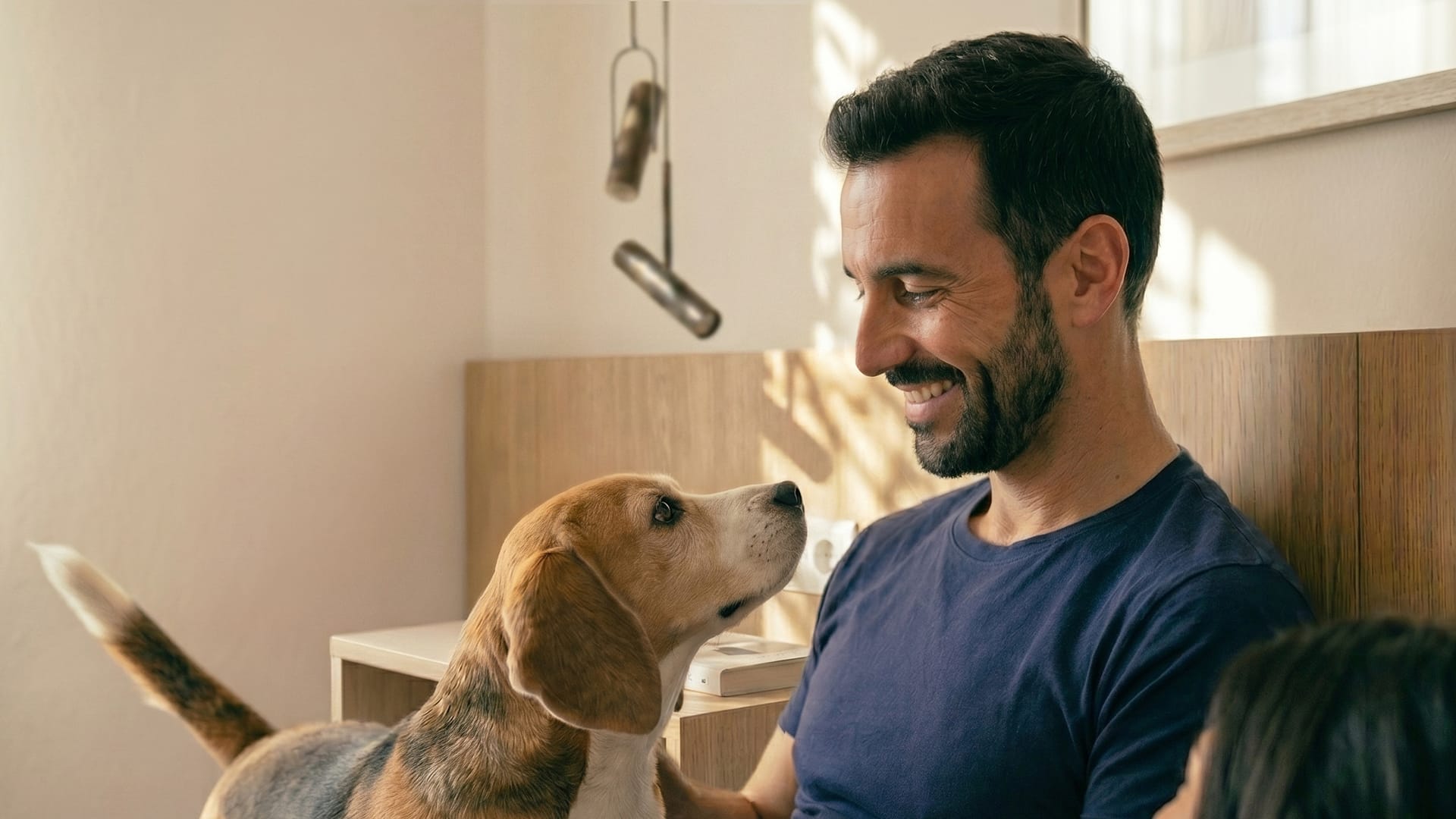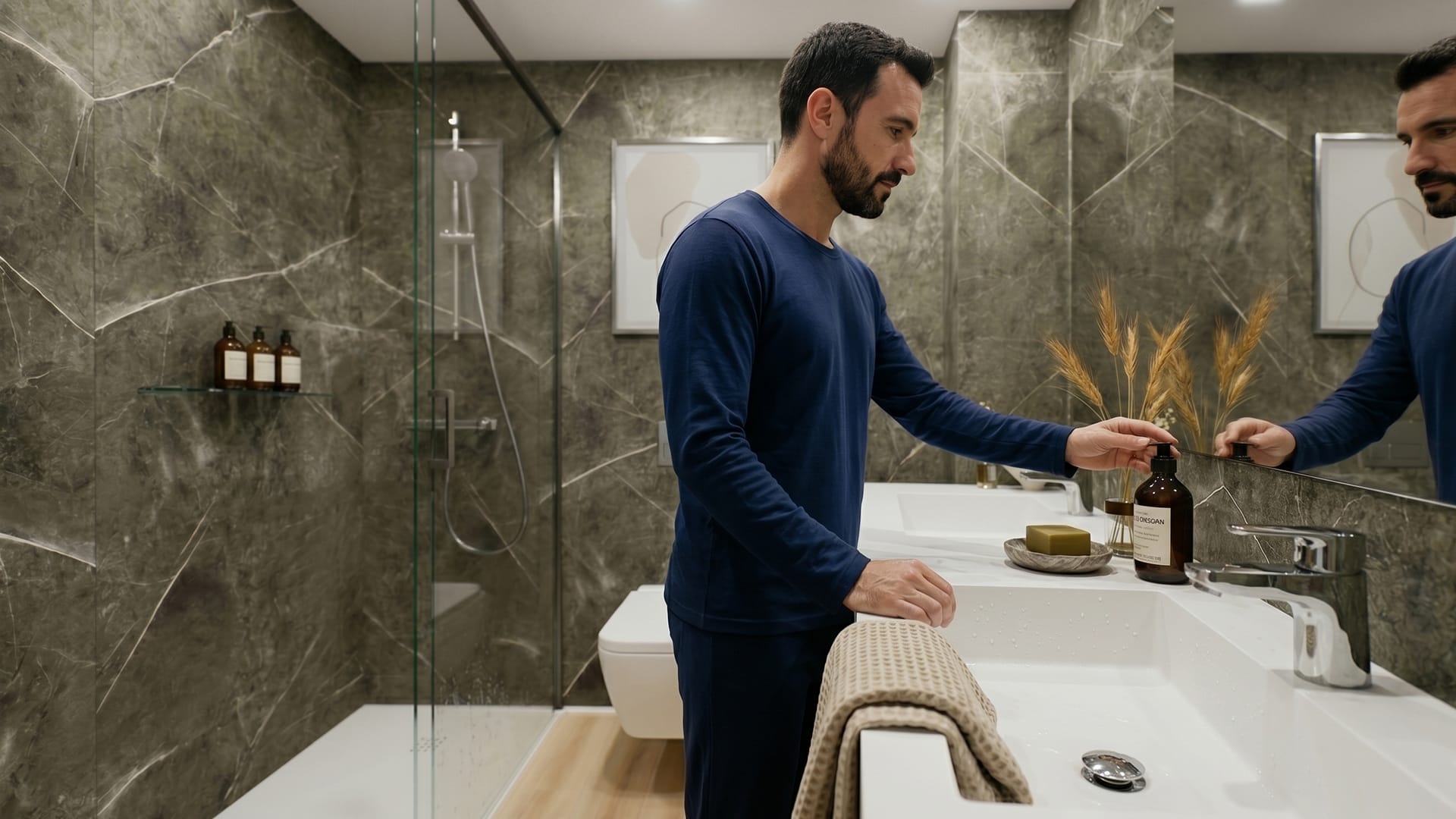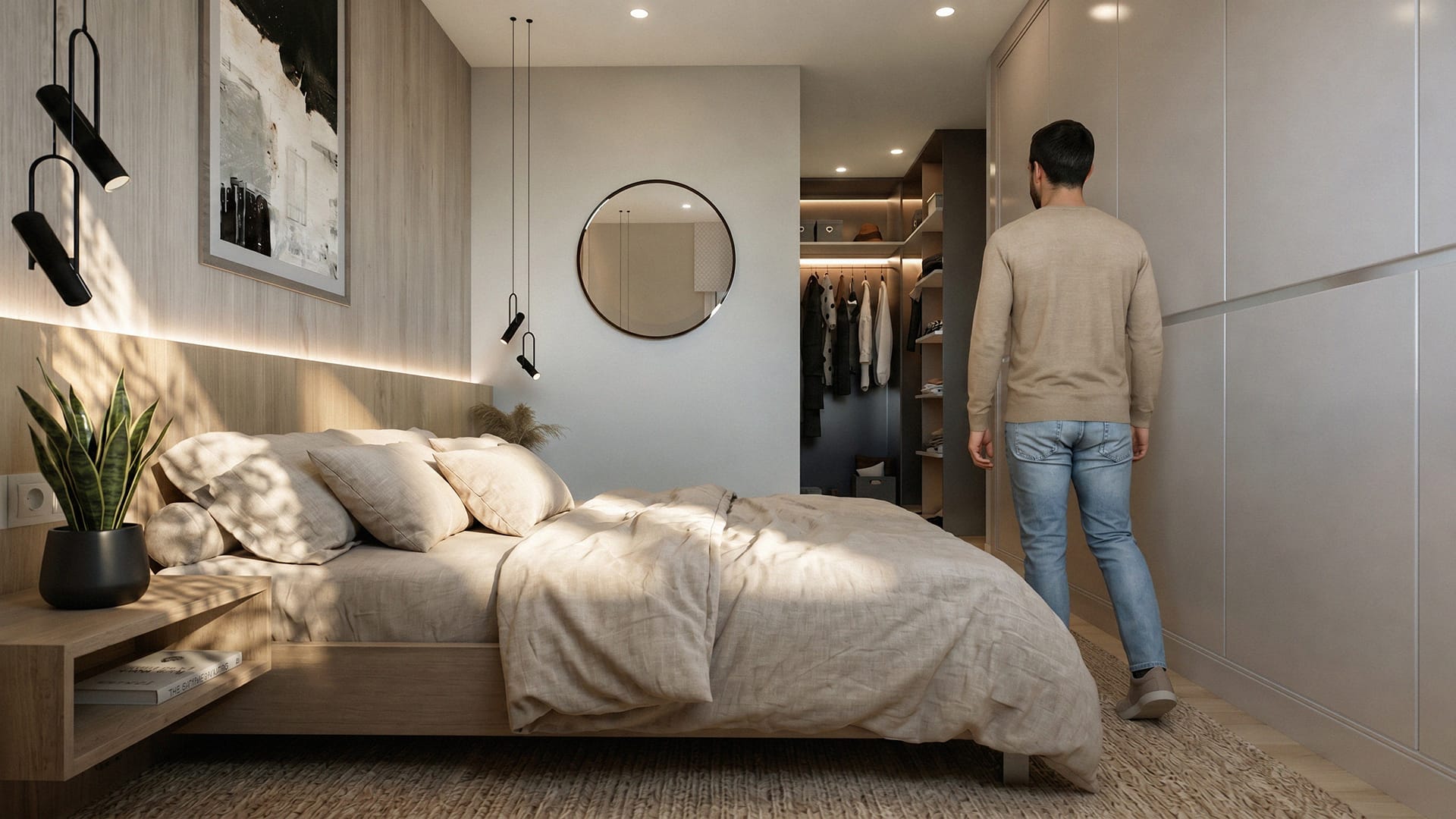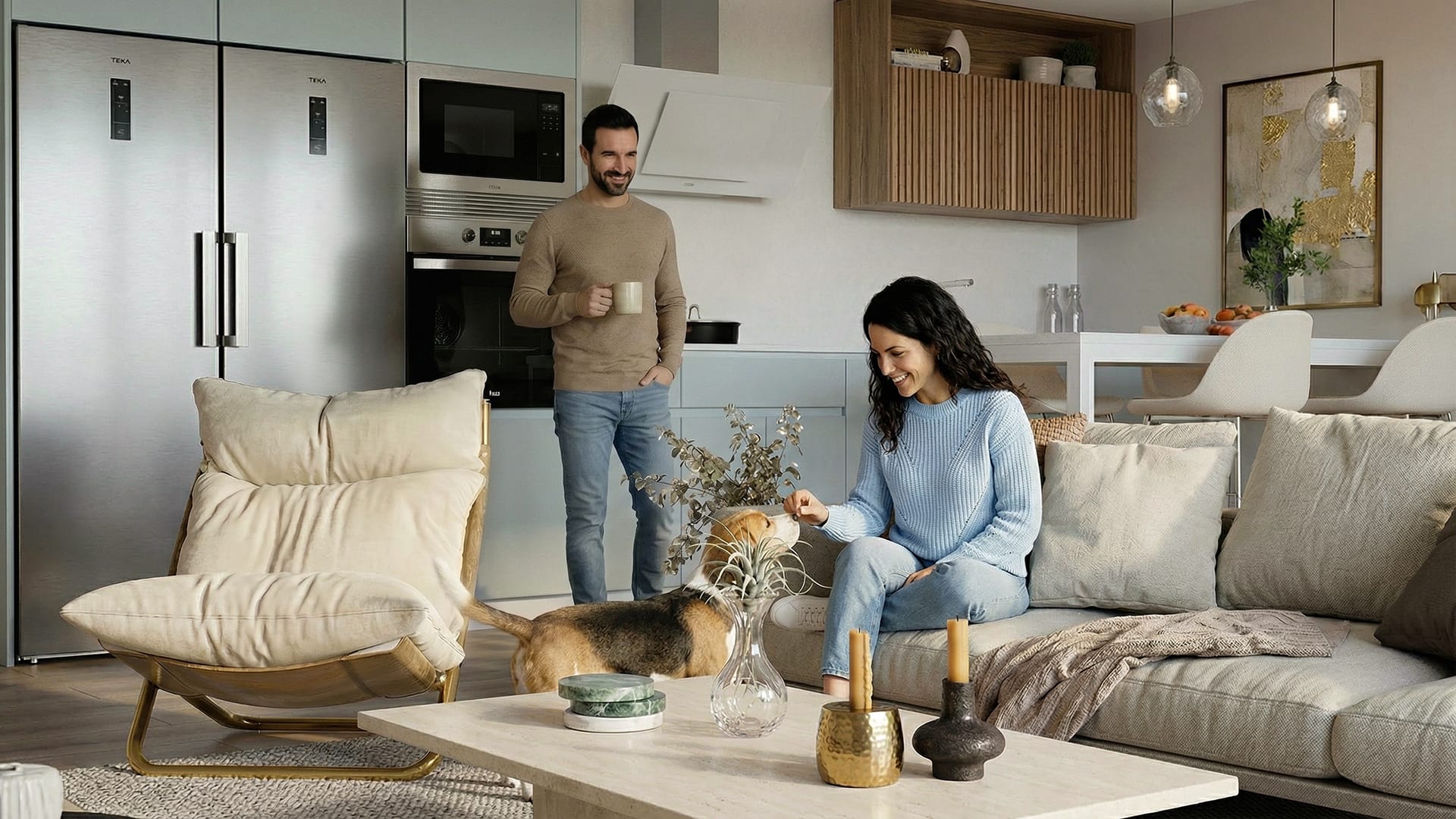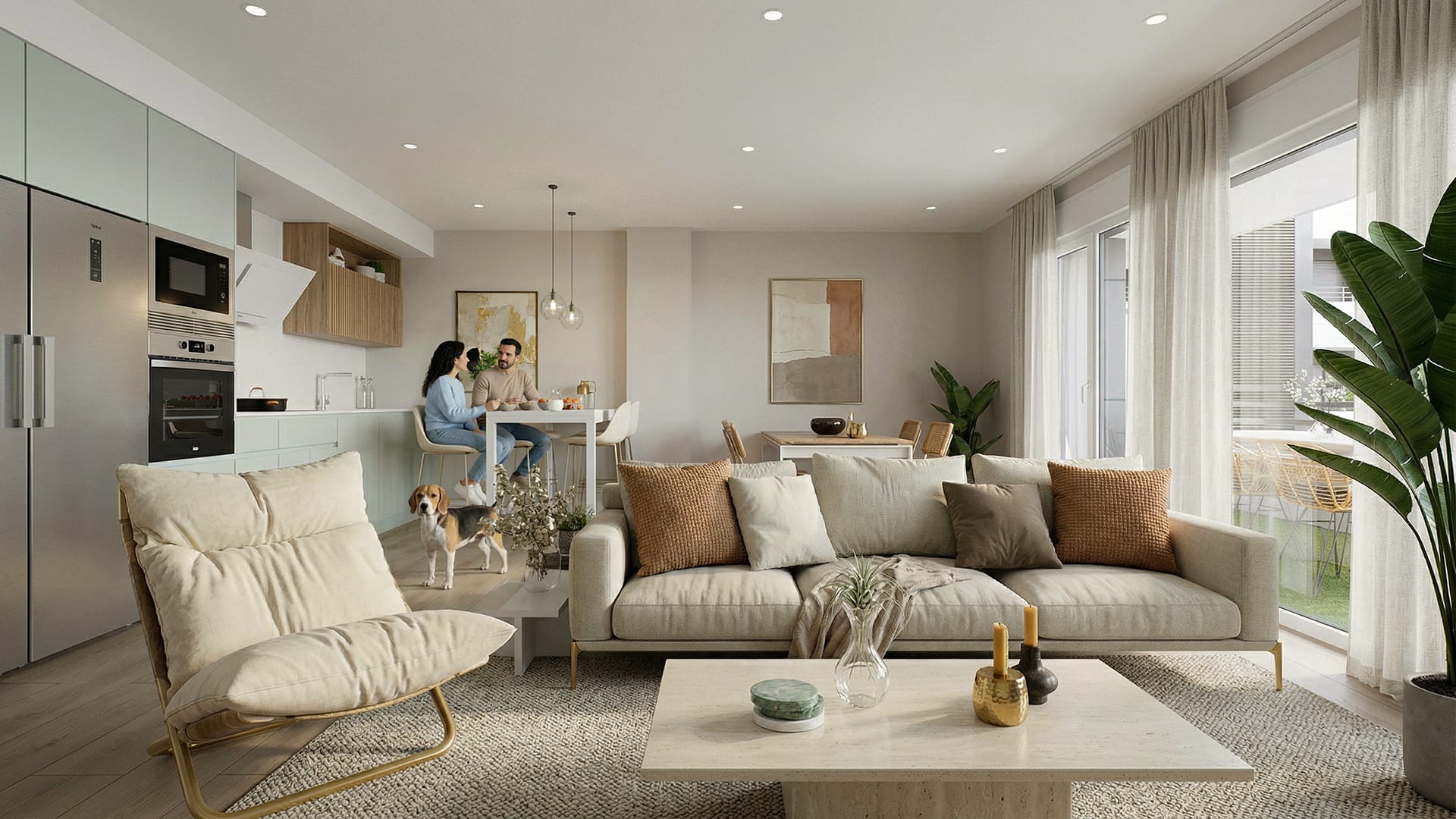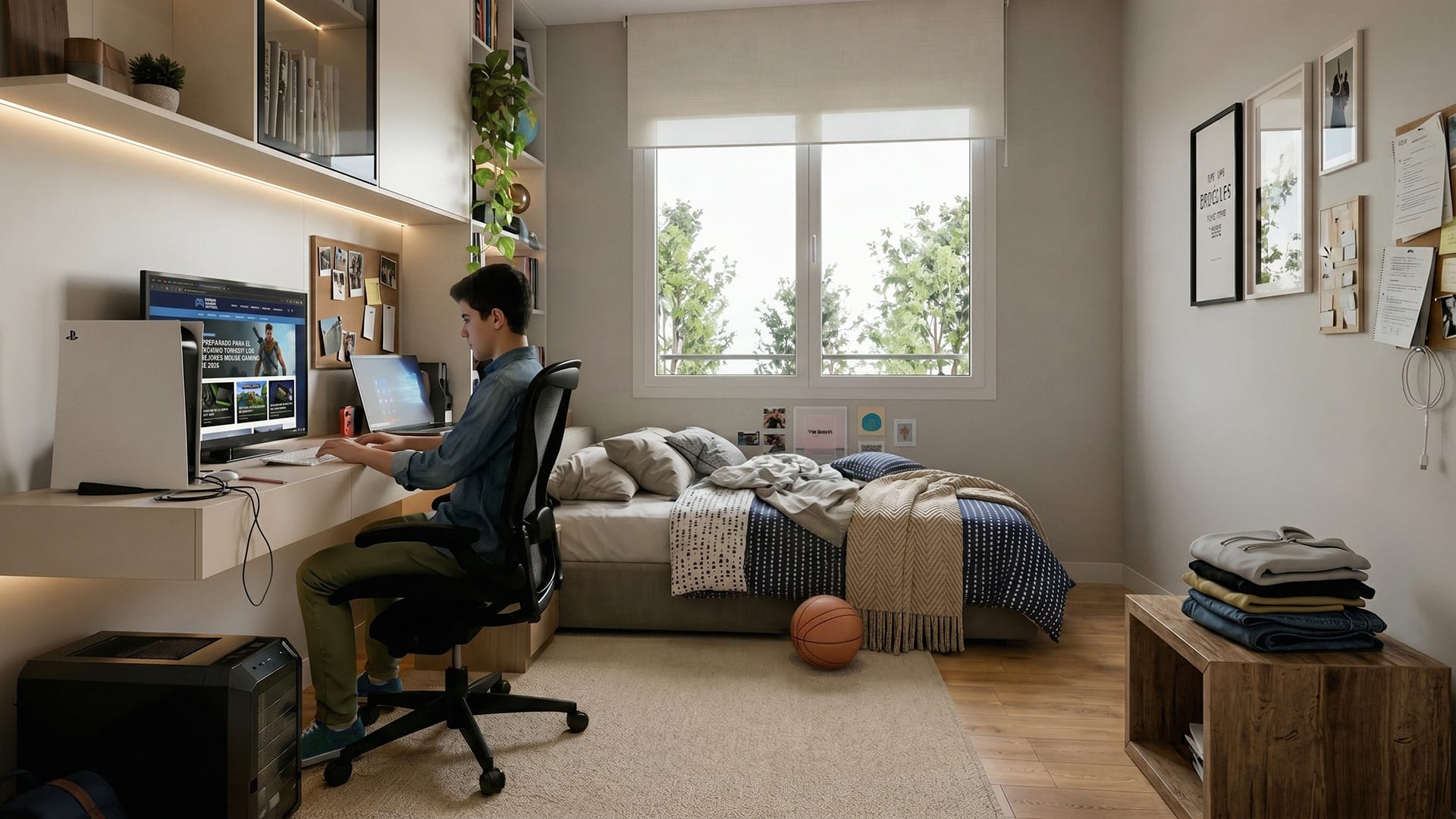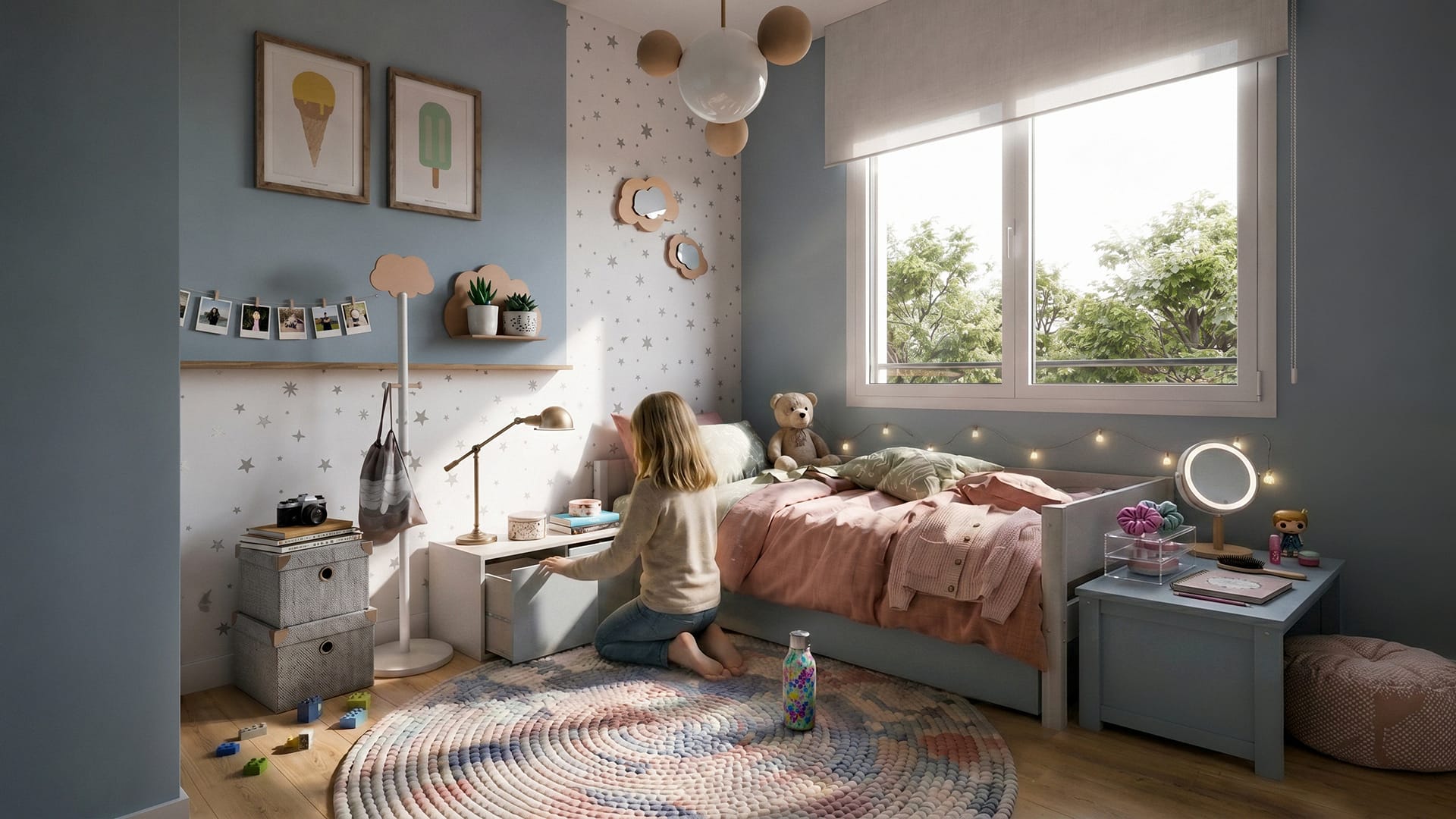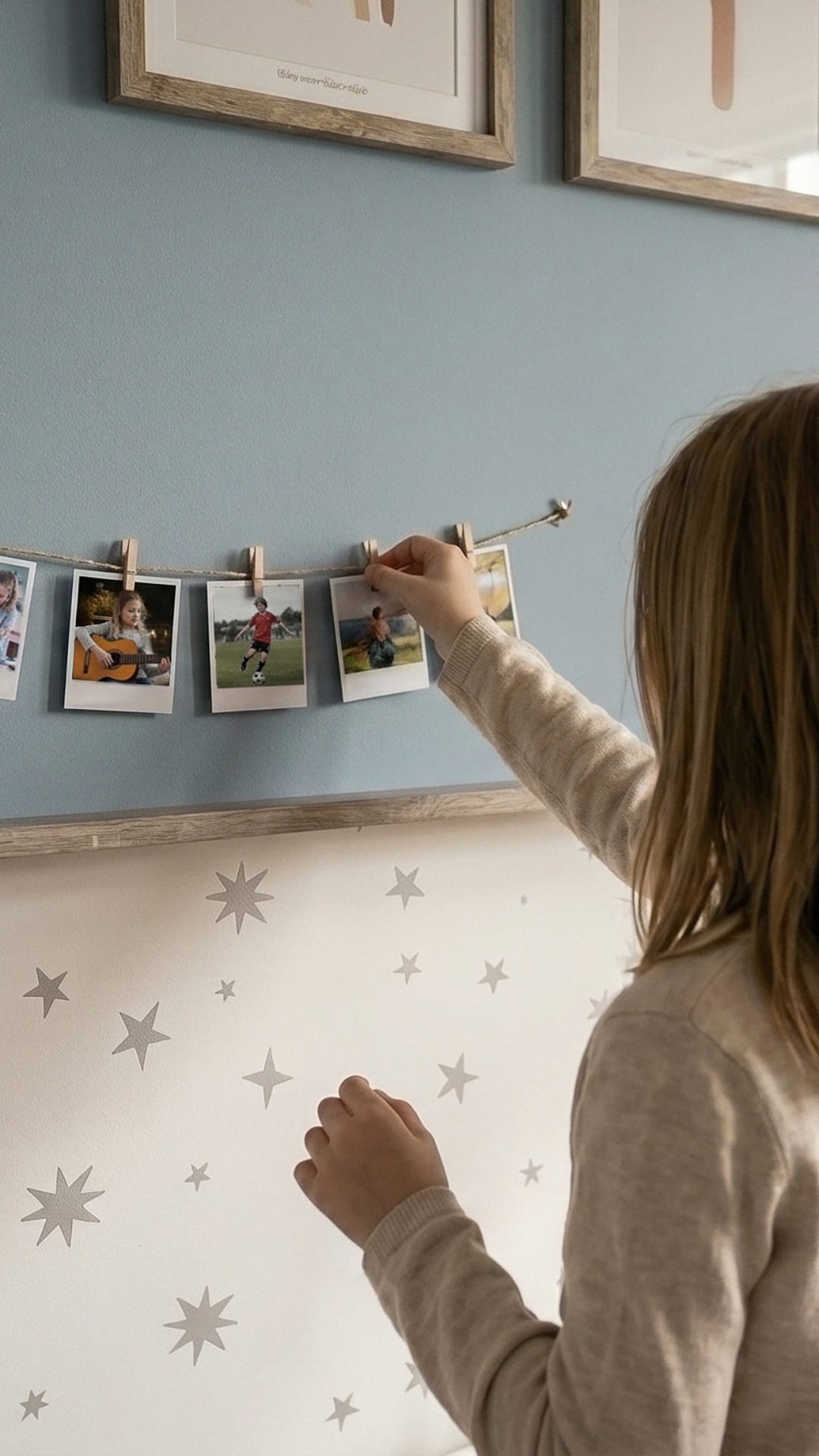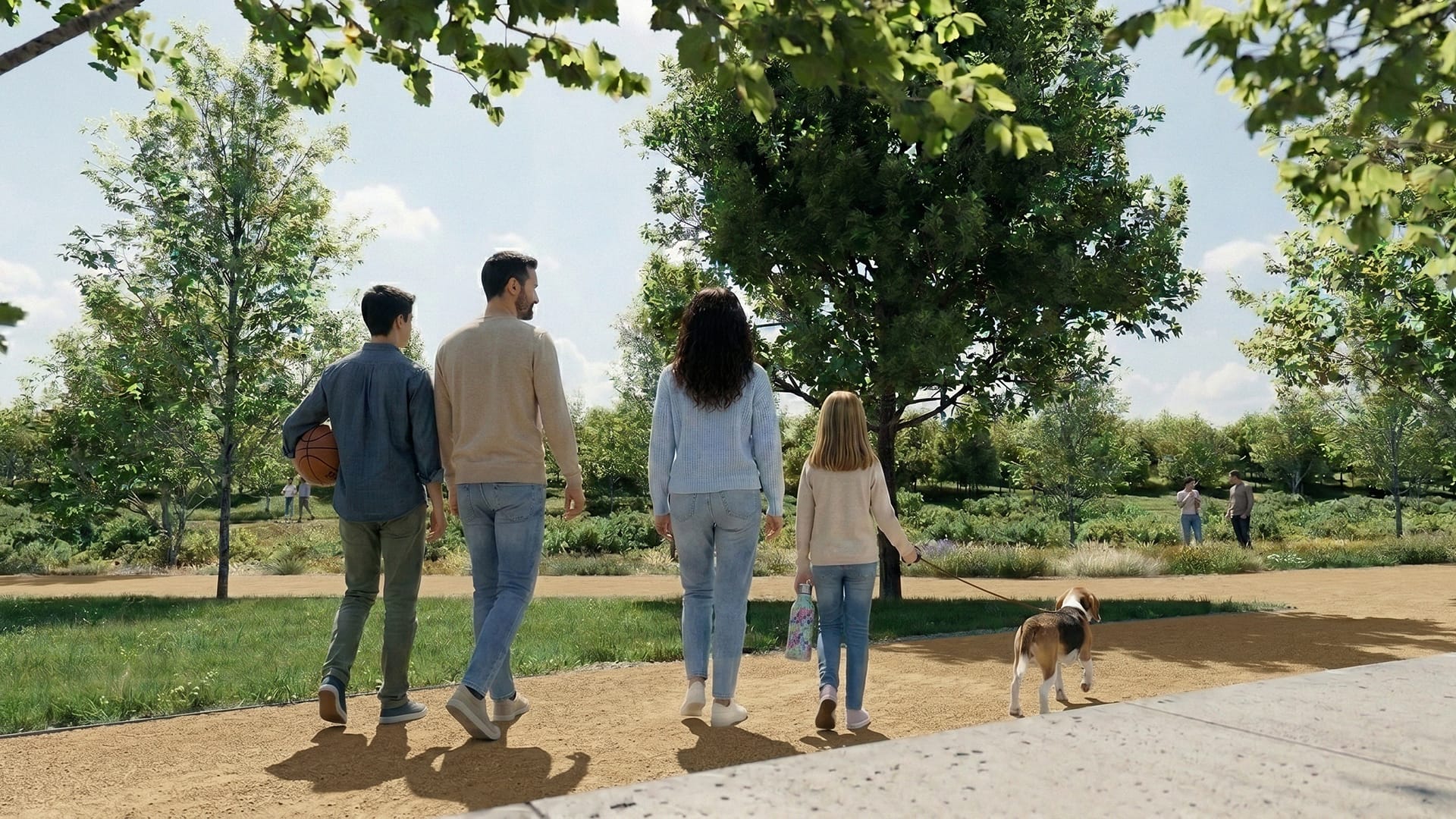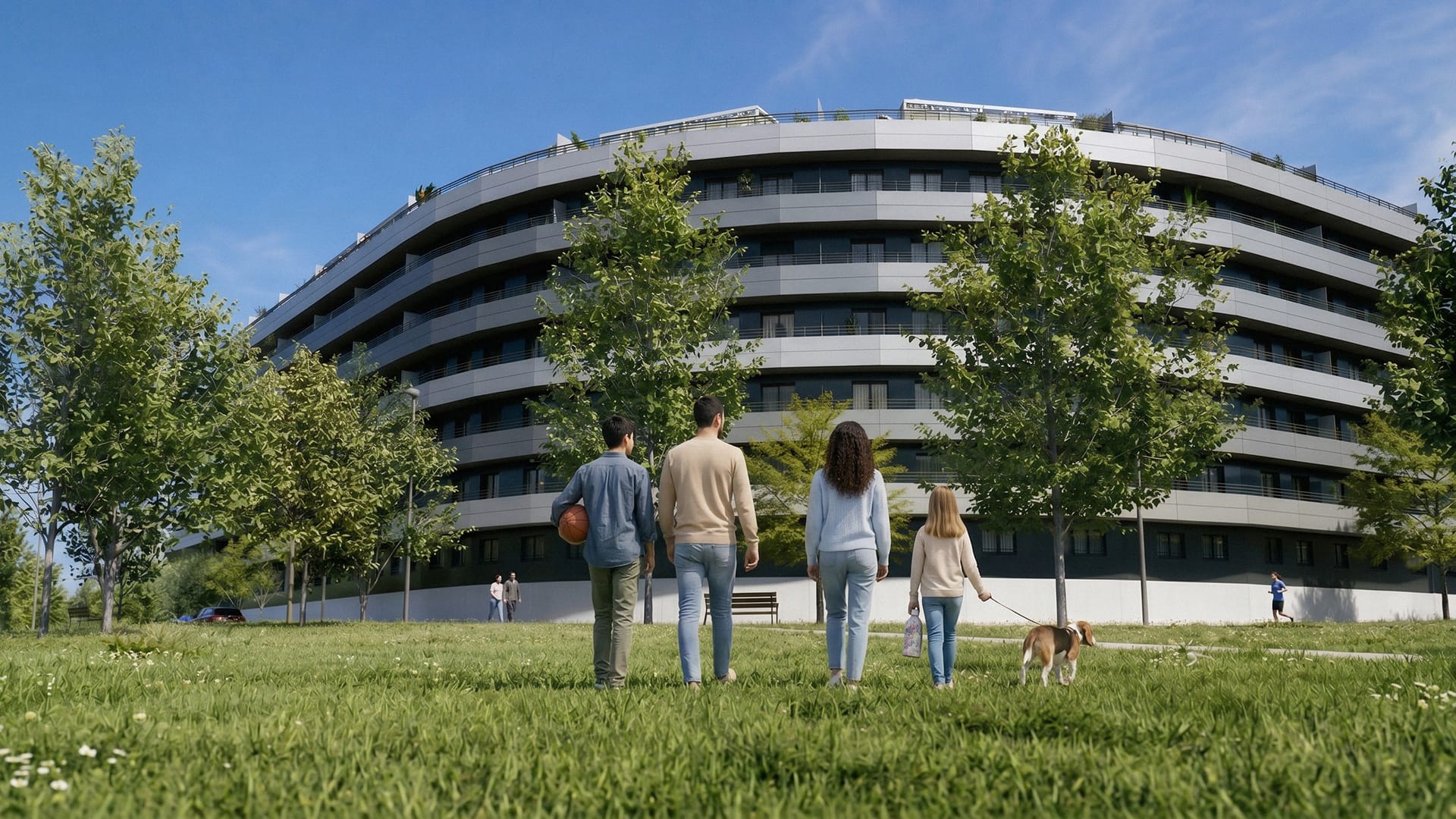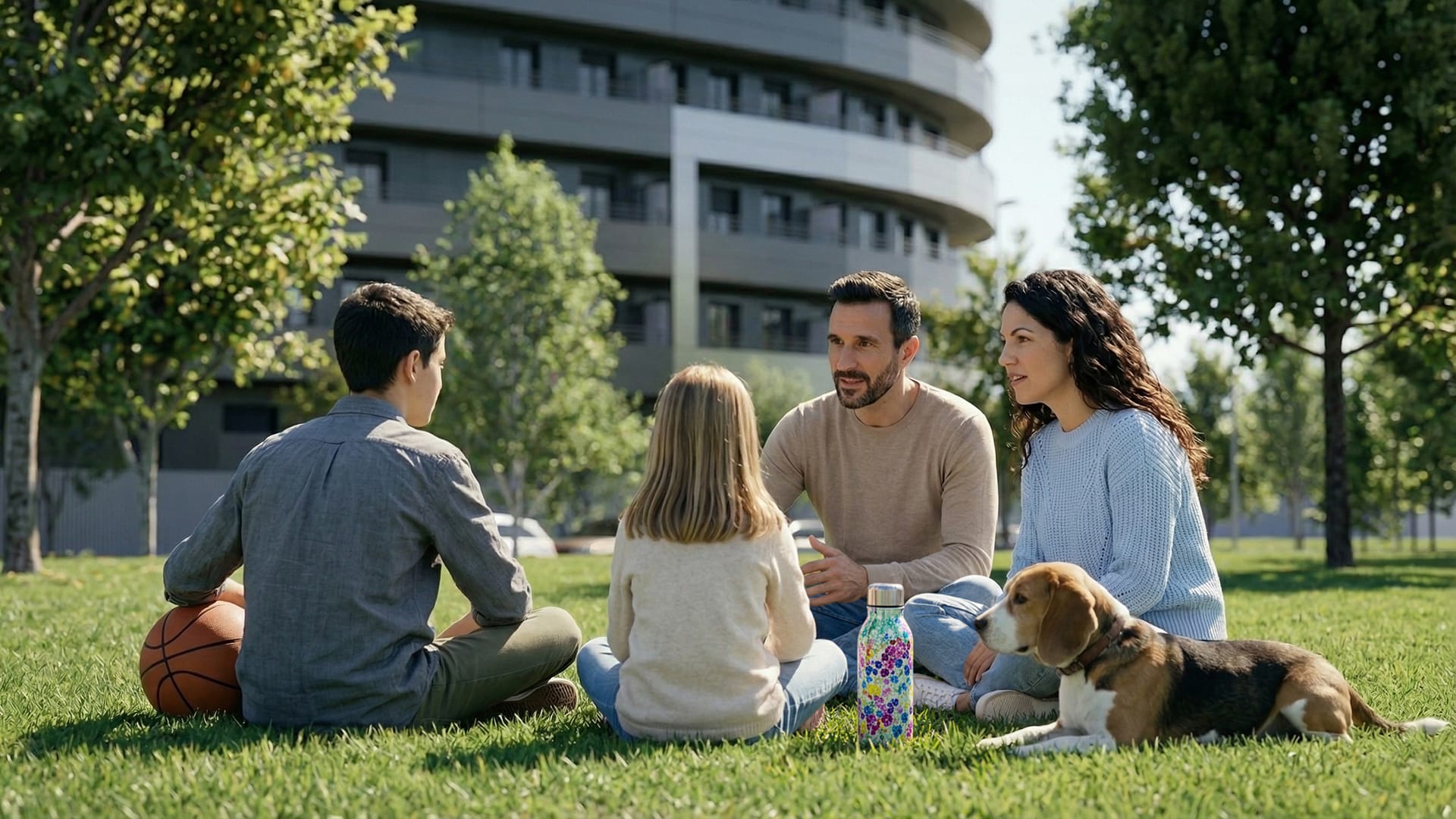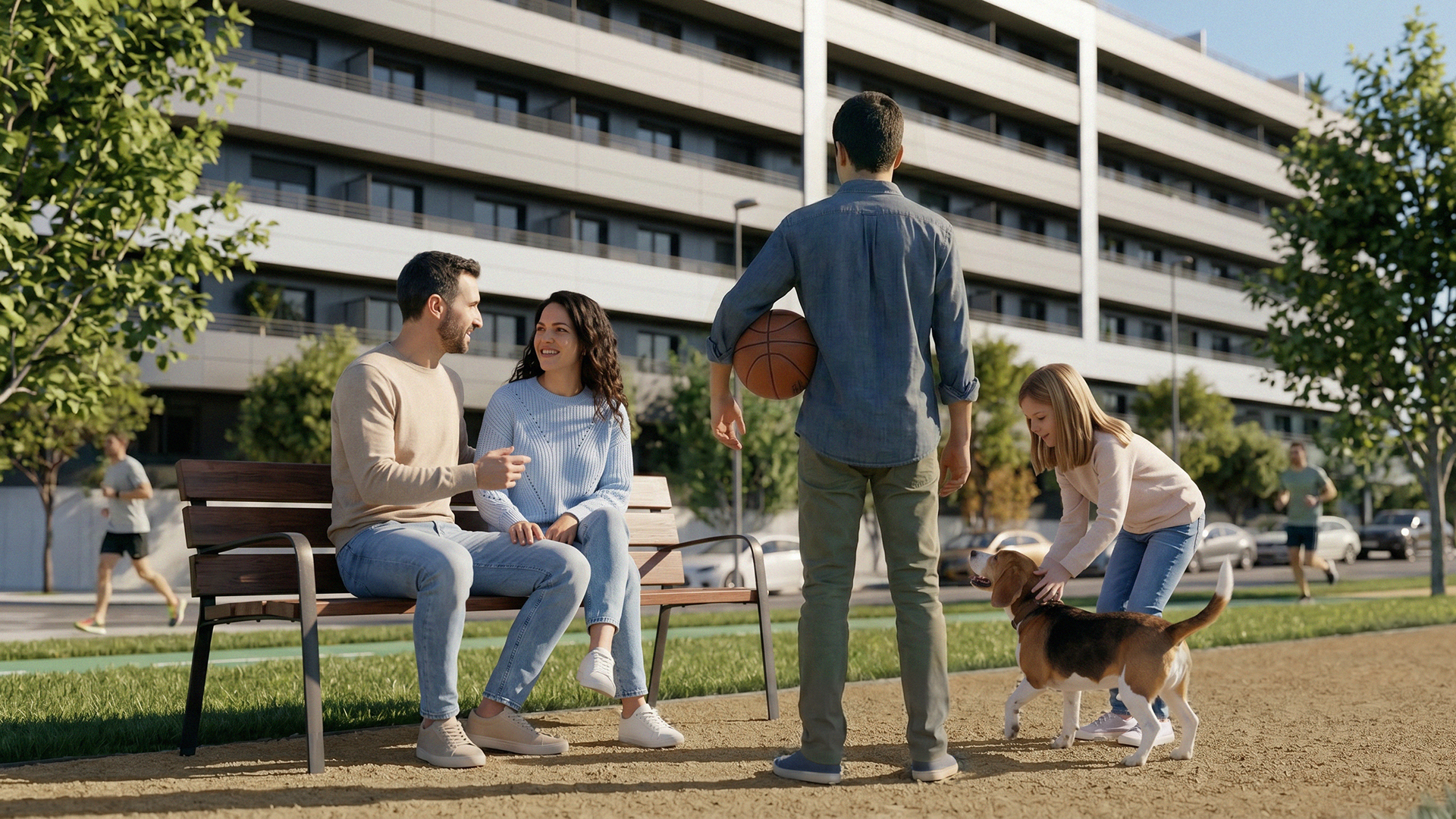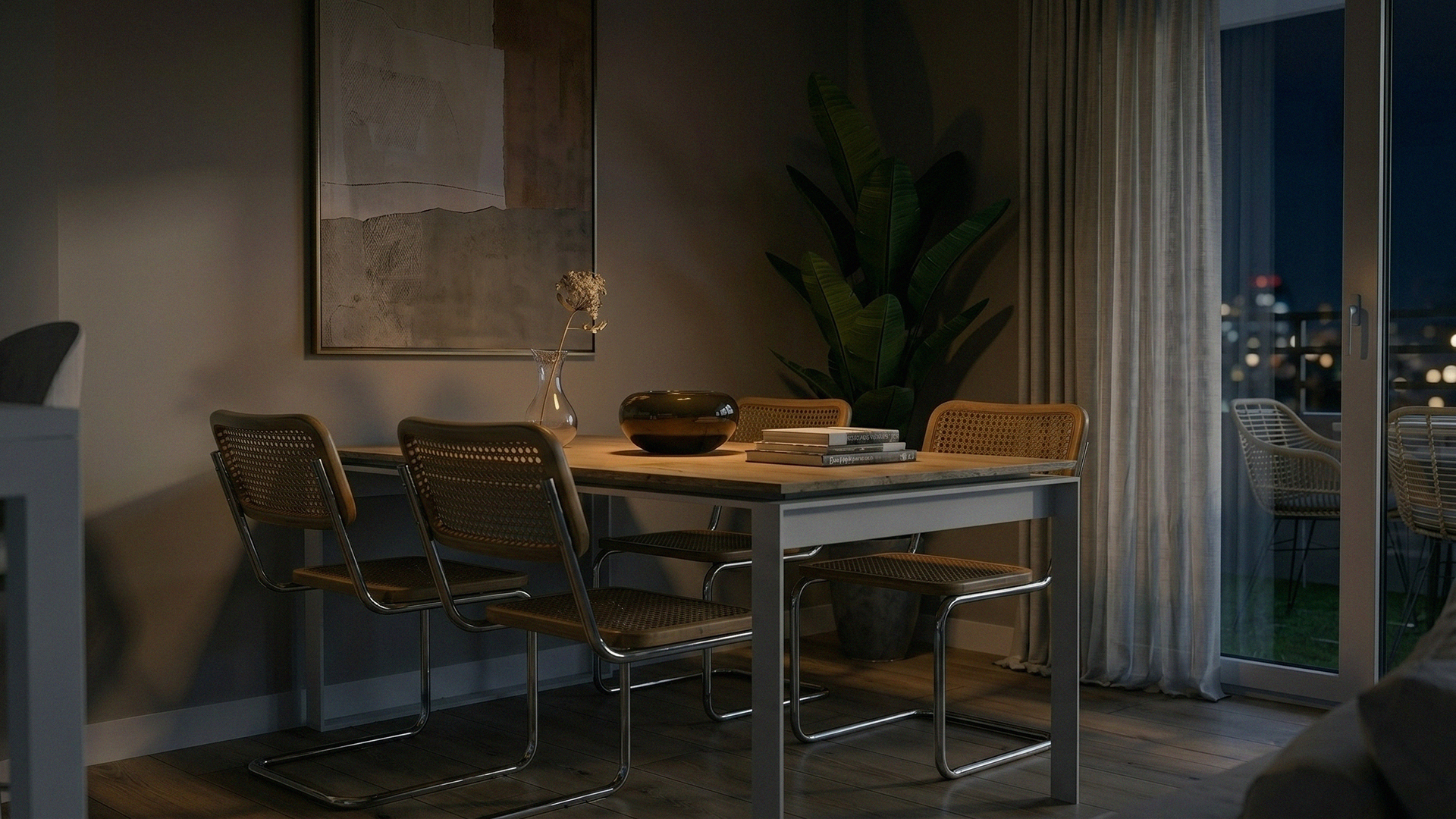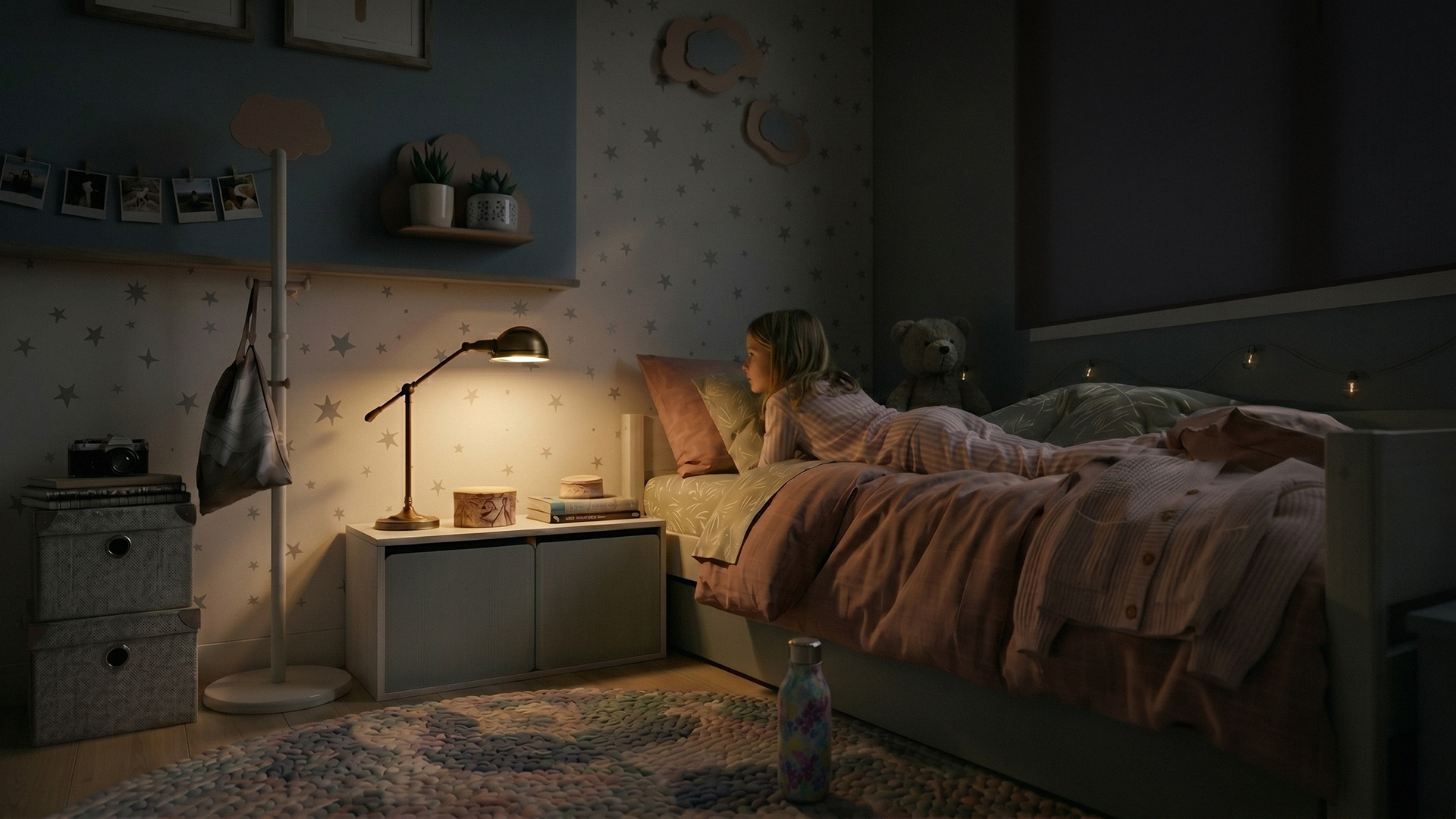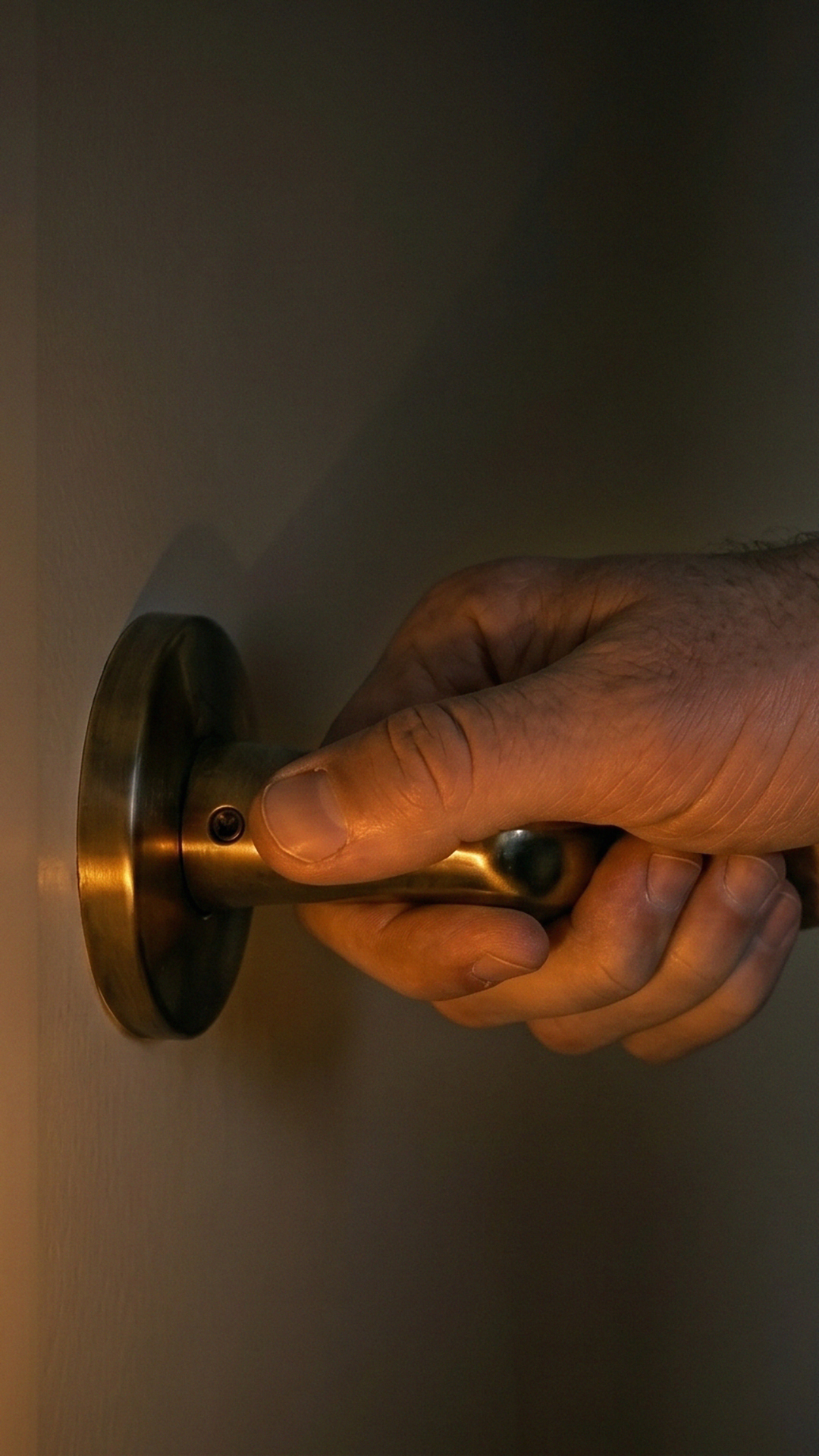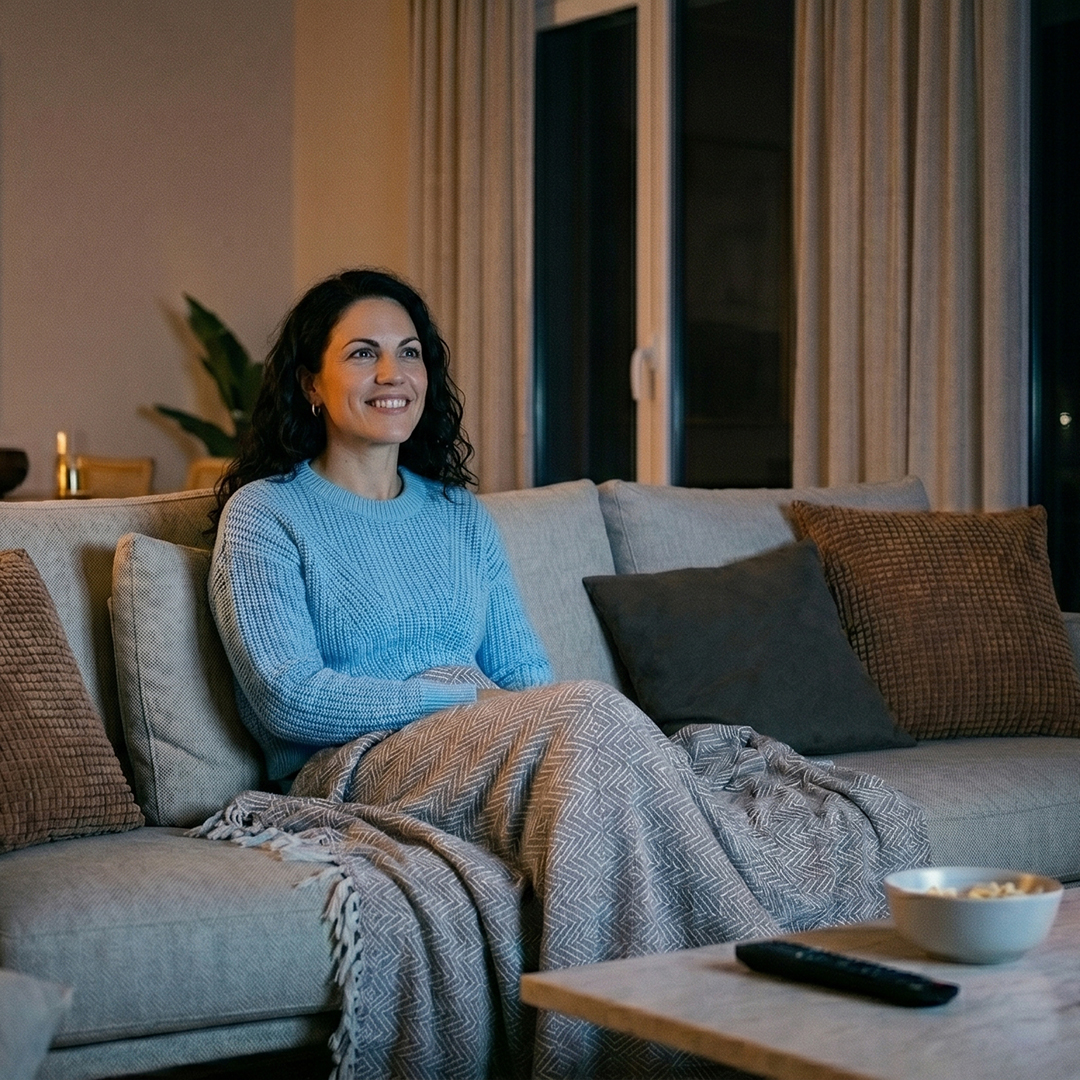
36 images + a cinematic video of approximately 4 minutes.
Dedicated social media clips and production priority
BEFORE WE DECIDE WHAT WE’RE GOING TO DO, THERE’S A FAR MORE IMPORTANT QUESTION:
What does your buyer need to see to understand the value of your development and find reasons to choose it over the others?
What does your buyer need to see to understand the value of your development and find reasons to choose it over the others?
Sometimes we’ll be able to make good use of what you already have.
Other times we’ll arrive before you’ve commissioned a single image.
And there are developments where showing the architecture perfectly isn’t enough:
first we need to understand what the buyer wants to change and what role your development can play in that change.
An image, a video, a 360°, a floor plan or drone footage are tools.
First we want to understand what you’re selling, to whom, and what should be clear to that person when they see it.
Then we decide what’s worth producing.
An image, a video, a 360°, a floor plan or drone footage are tools.
First we want to understand what you’re selling, to whom, and what should be clear to that person when they see it.
Then we decide what’s worth producing.
G
The G System exists so we don’t start making images out of habit.
First we define who the ideal buyer is and what reasons could make them prefer this development.
Then we decide how to make those reasons visible.
And only then do we talk about renders, video, 360°, drone or any other format.
If you already have material, we review it before producing anything.
If it works, we use it.
If it can be improved, we’ll see how far we can take it. And if something is missing, we’ll know what’s missing and, above all, what we need it for.
There’s not much more to it.
The difference is doing it in that order.
Not every development needs the same thing.
Not every development needs the same thing.
That’s why it makes no sense to offer the same work to everyone.
The three levels respond to three very different situations:
you already have material,
you’re starting from scratch, or
you also need to work on what moves the buyer.
It’s not about moving up a level.
It’s about starting where your development is.
You already have renders.
Before startingfrom scratch, we see how far we can take them.
You’re going to produce from scratch.
Before making a single image, we decide what the buyer needs to see.
We don’t start by showing the development.
We start by making visible why the buyer might want it.
THIS IS YOUR LEVEL IF…
You’ve already paid for images, maybe even video, but you’re not sure they’re showing what can really make someone prefer your development.
You’re about to go to market and you haven’t produced the sales material yet.
This is the best moment to decide well, before spending money on images you may not have needed.
You need more than showing the development well:
you want to increase desire, defend its value better and make the buyer remember it over the others.
WHAT WE NEED FROM YOU
Your current images
+ basic project documentation.
2D plans and project documentation
+ sales information to define the buyer, their motivations and the story.
2D plans and project documentation
+ sales information to define the buyer, their motivations and the story.
WHAT YOU GET
12 images + a video of approximately 1 minute.
24 images + a video of approximately 2 minutes.
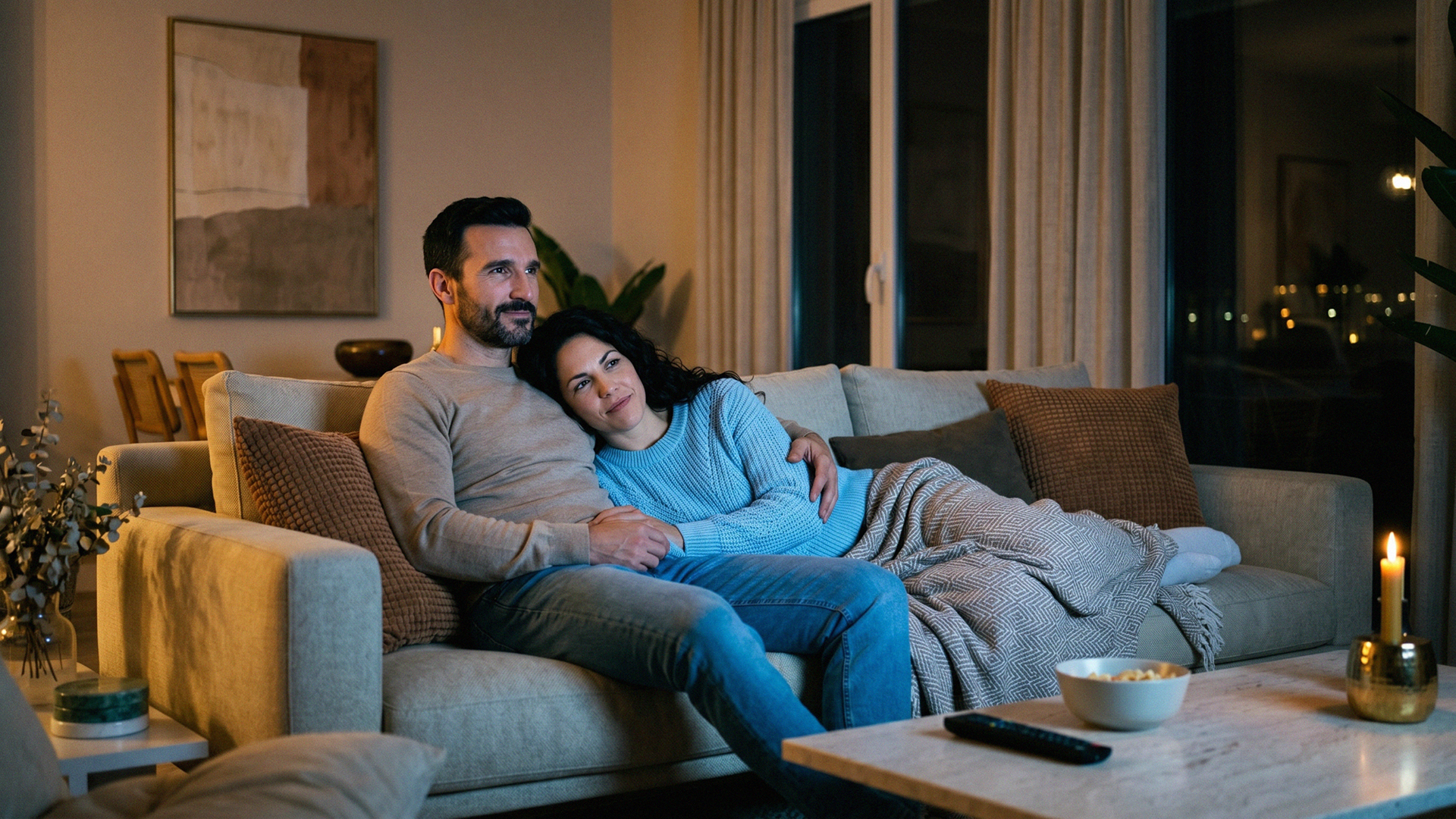
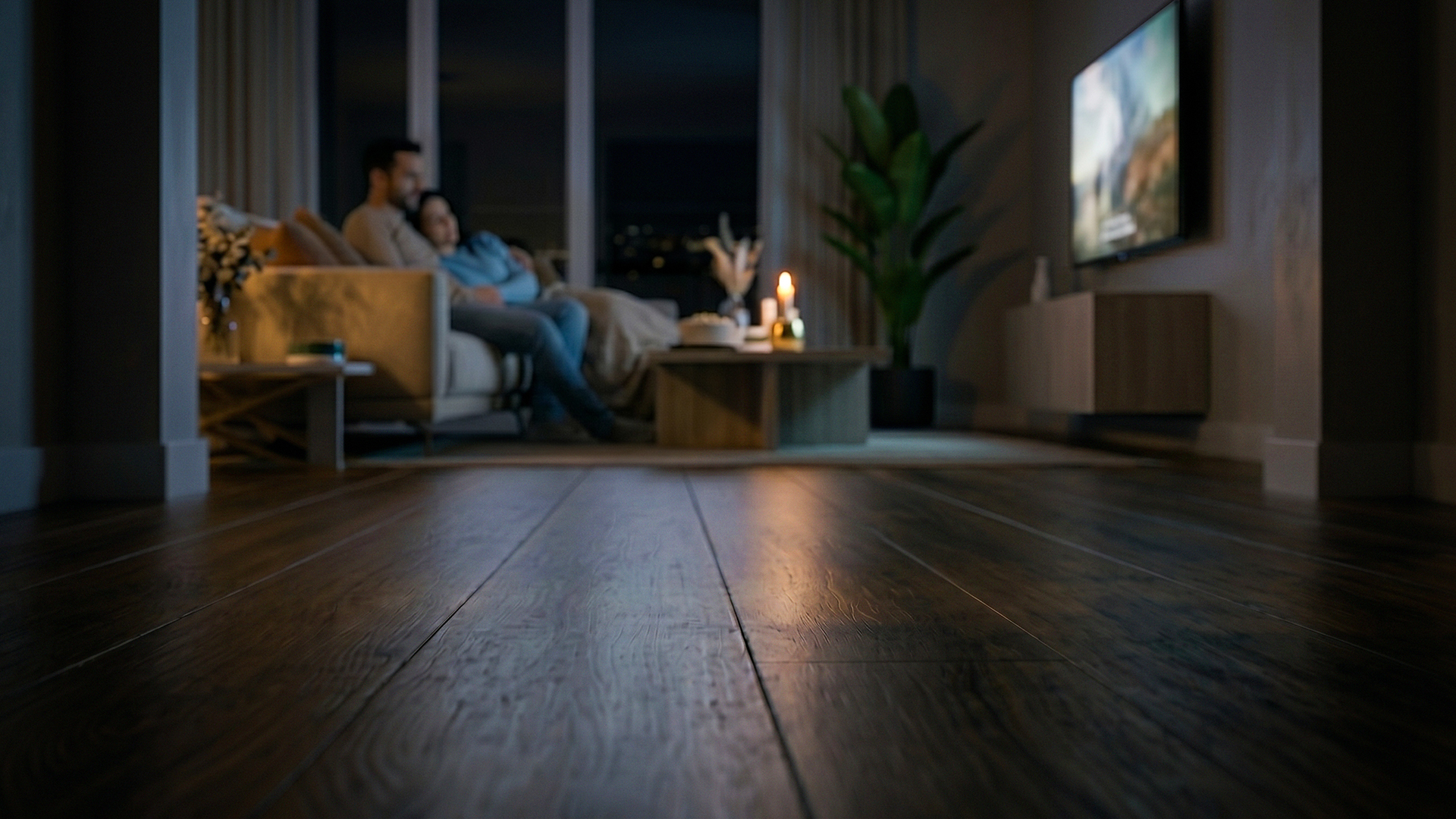
36 images + a cinematic video of approximately 4 minutes.
Dedicated social media clips and production priority
This table is a reference, not a fixed catalog.
The quantities above help you understand the scale of each level.
The final scope is confirmed once we know what the development needs to communicate.
We don’t add pieces to reach a number if they aren’t needed, and we don’t fall short if the project demands more
You already have renders.
Before startingfrom scratch, we see how far we can take them.
THIS IS YOUR LEVEL IF…
You’ve already paid for images, maybe even video, but you’re not sure they’re showing what can really make someone prefer your development.
WHAT WE NEED FROM YOU
Your current images + basic project documentation.
WHAT YOU GET
12 images + a video of approximately 1 minute.
You’re going to produce from scratch.
Before making a single image, we decide what the buyer needs to see
THIS IS YOUR LEVEL IF…
You’re about to go to market and you haven’t produced the sales material yet.
This is the best moment to decide well, before spending money on images you may not have needed.
WHAT WE NEED FROM YOU
2D plans and project documentation
+ sales information to define the buyer, their motivations and the story.
WHAT YOU GET
24 images + a video of approximately 2 minutes.
We don’t start by showing the development.
We start by making visible why the buyer might want it.
THIS IS YOUR LEVEL IF…
You need more than showing the development well:
you want to increase desire, defend its value better and make the buyer remember it over the others.
WHAT WE NEED FROM YOU
2D plans and project documentation
+ materials and the information needed to produce.
WHAT YOU GET
36 images + a cinematic video of approximately 4 minutes.
Dedicated social media clips and production priority.
This table is a reference, not a fixed catalog.
The quantities above help you understand the scale of each level.
The final scope is confirmed once we know what the development needs to communicate.
We don’t add pieces to reach a number if they aren’t needed, and we don’t fall short if the project demands more.
The G System is not an extra.
It’s always applied to define, or to check, who the priority buyer is and what they need to see.
All three levels work with image and video.
What changes is the starting point and the depth of the intervention.
Includes 2 rounds of revisions in the initial phase of the project.
Delivery ready to go to market.
Video format 1080p Full HD (4K if we see it’s needed), including rendering, editing, AI tools where they add value, post-production and final cut.
Image format 4K.
Voice-over is not included unless expressly agreed in the proposal.
Right now you’re probably thinking:
“This is all very nice, Juan.
But how much does it cost?”
Good question.
It makes no sense to give you a figure before knowing what development you have in hand,
what material exists and how far it’s worth going.
In a meeting we’ll look at your case, I’ll tell you which level I consider enough, and then we talk numbers.
You already have images.
The question is how much more
we can get out of them.
You already have images.
The question is how much more
we can get out of them.
Your renders may not be bad.
In fact, they probably aren’t.
The problem is a different one:
you’ve invested in them and you know the development could be conveying far, far more.
In this situation, we don’t open a 3D program and rebuild the development from scratch.
We start from exactly what you give us.
We select the images that still have mileage and work on them until we’ve checked how much of that investment we can recover, before suggesting you start over.
We can improve materials, lighting, decoration, vegetation, people, atmosphere and the sense of life.
And, when the material allows it, generate nearby viewpoints and turn static images into a video that didn’t exist before.
That’s precisely the point of this level.
IMAGES PROVIDED BY THE CLIENT
The ones we receive
A set of renders that do a basic job, but whose quality or power to seduce has fallen short of what the development needed.
No need to demonize them.
We need to see what we can do with them.
IMAGES DELIVERED TO THE CLIENT
How far we take them
Images that stop looking like a correct representation and start conveying the quality, the atmosphere and the life you want associated with the development.
And, on top of that, using those images to generate a video you didn’t have.
YOU AVOID
Throwing an investment you’ve already made overboard and paying again for work that might still be usable.
If the material you have is usable, the logical thing is to get everything out of it before replacing it.
WE STRENGTHEN
The investment you already made.
We work on your images to improve their perceived quality, the atmosphere and the sense of life.
The idea isn’t simply that they look better.
It’s getting images that had fallen short to work for the development again and help the buyer imagine living there. And, when the material allows it, using them as a starting point to create new pieces and video.
YOU GET
A new production built from the material you already had: improved images and, when technically possible, video and new derived pieces.
Scope reference: 12 images and
approximately 1 minute of video.
The final scope is confirmed after reviewing how far we can take the source material.
FINAL VIDEO CREATED FROM THE IMPROVED MATERIAL
Before commissioning anything new, it’s worth knowing whether the problem really lies in what’s missing.
If you haven’t done anything yet,
we have an advantage:
you haven’t made any expensive decisions yet.
If you haven’t done anything yet,
we have an advantage:
you haven’t made any expensive decisions yet.
This is probably the most common scenario.
You have the architect’s project.
You have a date in mind to start selling.
And you start looking for who’s going to produce the images you’ll go to market with.
Here the order matters a lot.
First we decide what the buyer should discover when they see the development.
Then we decide what images and video we need to achieve it.
And then we make them.
It sounds obvious.
And yet, very often it’s done exactly the other way round:
first the views get commissioned, and then we try to justify what they’re for.
ONE is a good example.
In this case we didn’t need to build a story like the one you’ll discover in Level 3.
We needed someone weighing up a major investment to be able to look at a development that hadn’t been built yet and think, from the very first image, that it lived up to what they were being asked to pay.
The architecture had to look good.
The materials had to look good.
The spaces had to feel spacious.
The views had to justify their leading role.
And everything had to belong to the same development.
Not because consistency is a nice word.
Because it’s hard to defend a high price if the communication makes the development look ordinary.
FINAL VIDEO – ONE
See the full project here
Here there was nothing to invent.
The job was to make ONE look as good as it was going to be.
The development didn’t exist yet, so for a long time these images were going to be the closest thing to visiting it.
That’s why we took special care with everything that could justify its value:
the architecture, the materials, the size of the spaces, the views, the communal areas and that relationship between inside and outside that’s part of the project’s appeal.
But there was something else that mattered.
Every image had to convey the same level.
Three spectacular renders are worth little if the fourth looks like it belongs to a different development.
With ONE we wanted the feeling to be the same as you moved from one image to the next:
“This lives up to what they’re proposing I buy.”
YOU AVOID
Starting to produce views before deciding what the buyer needs to understand, and ending up paying for correct images that show many things, but not necessarily the important ones.
Here we decided first what was worth showing. And then we produced it.
WE STRENGTHEN
The perception of quality and value from the first contact.
The development can’t be visited yet, so a good part of what the buyer believes about it will depend on how we show it to them.
Architecture, materials, spaces, views and communal areas have to convey one and the same feeling:
that what they’re looking at lives up to what you’re asking them to pay.
YOU GET
A complete production, built from scratch for the development.
Scope reference:
24 images and approximately
2 minutes of video.
A real case may need a bit more or a bit less:
The figures are a reference.
The final scope is decided once we know what the development needs to tell.
You don’t always need to build a story. Some developments have enough arguments of their own.
The job is to choose them well and show them with a quality that lives up to what you want to sell.
If you want to sell faster and defend the value of the development better,
showing the home well may not be enough.
If you want to sell faster and defend the value
of the development better,
showing the home well may not be enough.
A real estate development comes with a very logical temptation.
You’re proud of the project.
You like the architecture.
The terrace is fantastic.
The pool turned out beautifully.
And that’s where you start the communication.
With you.
With your development.
With everything good about it.
But the buyer isn’t thinking about your building yet.
They’re thinking about their life.
And that’s where we start.
Why we made LIVE BETTER this way
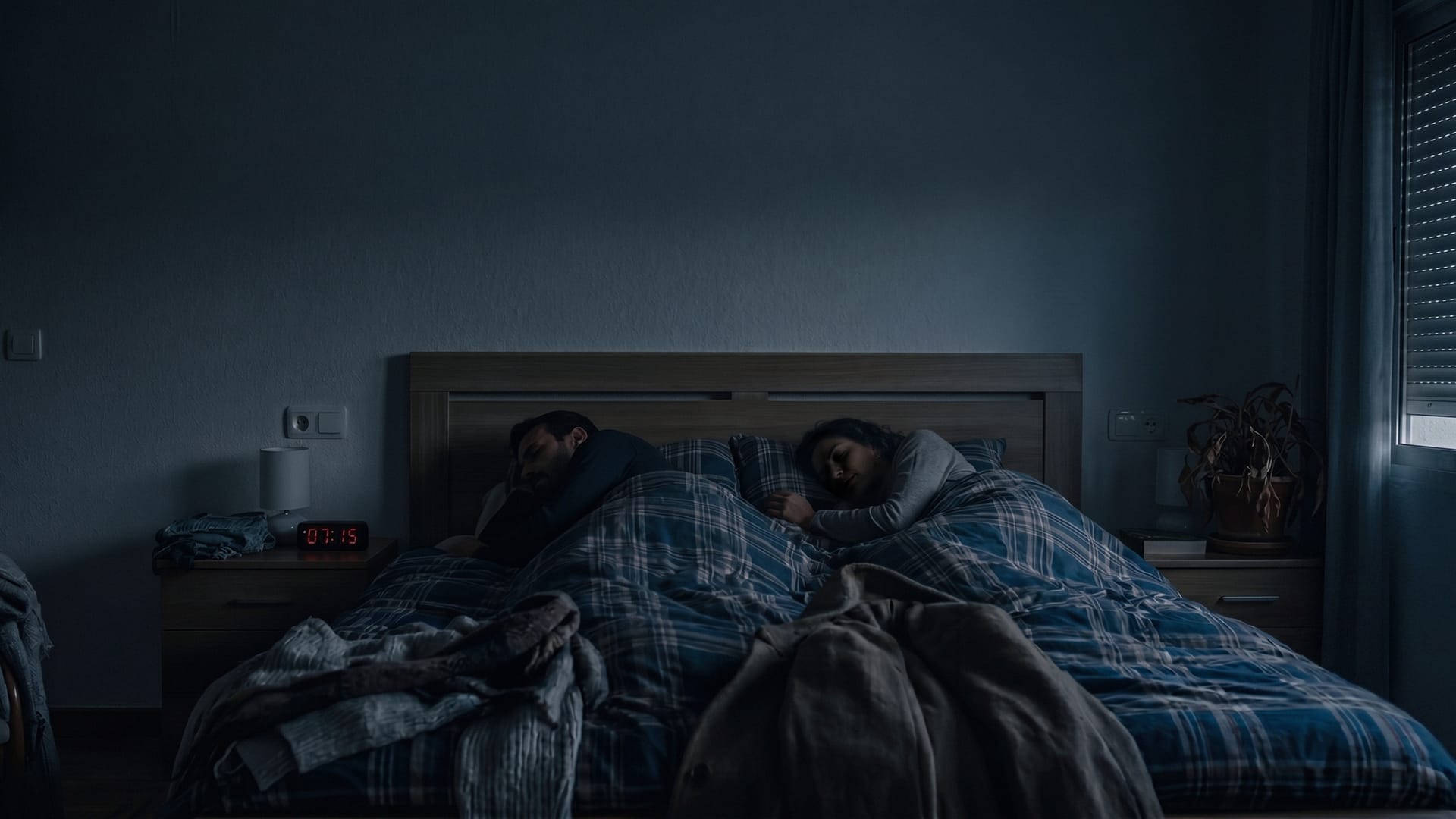
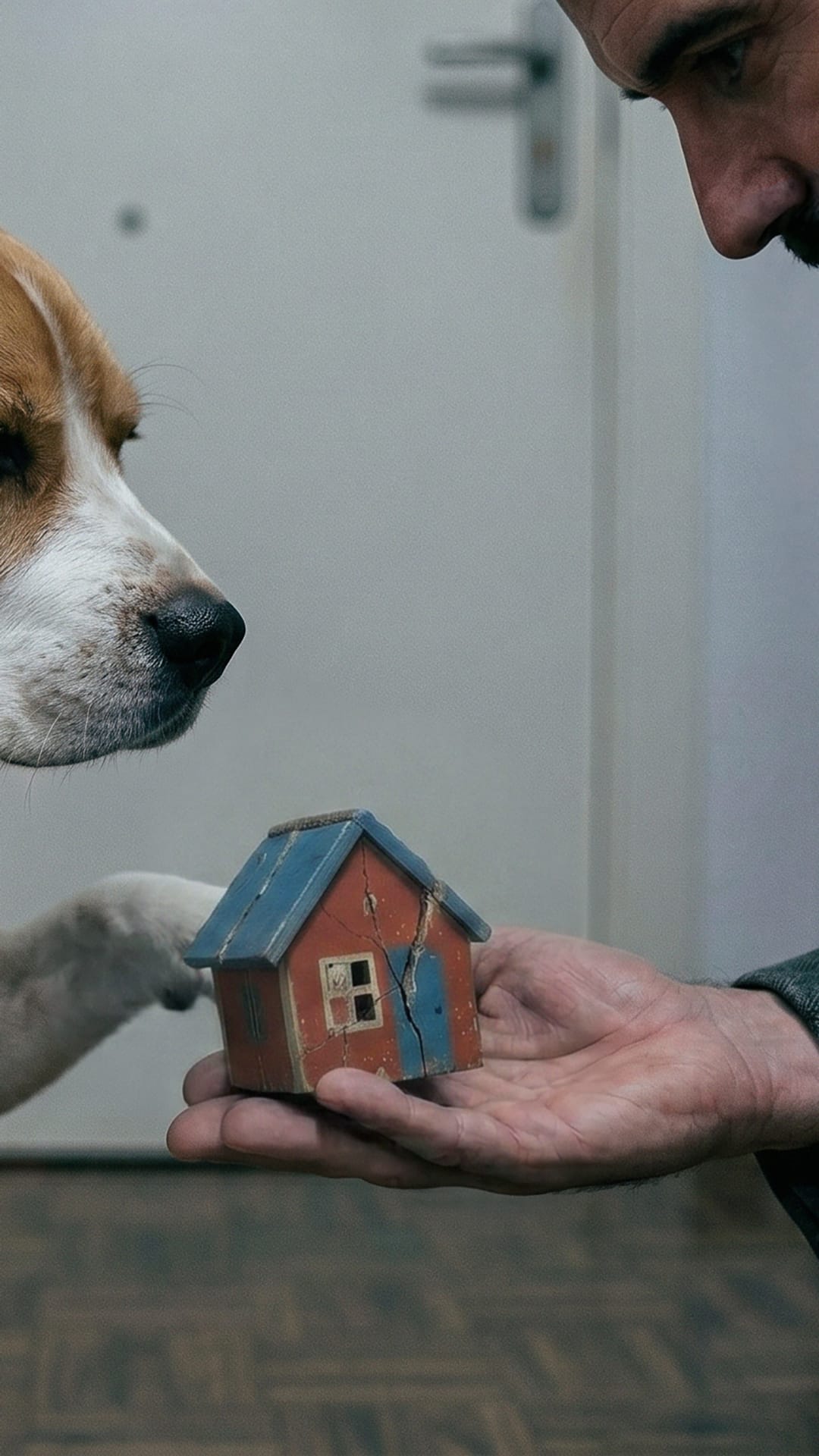
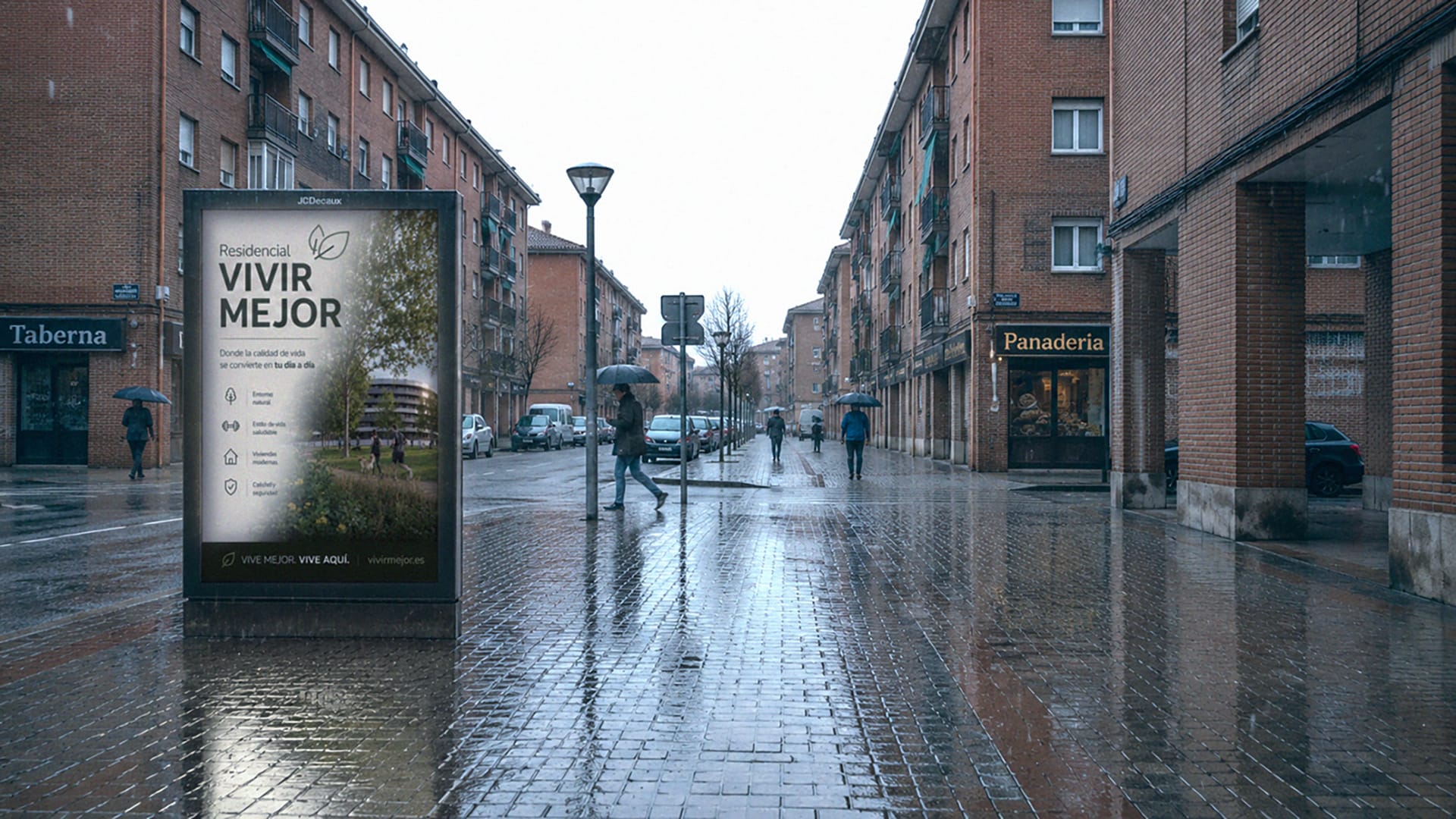
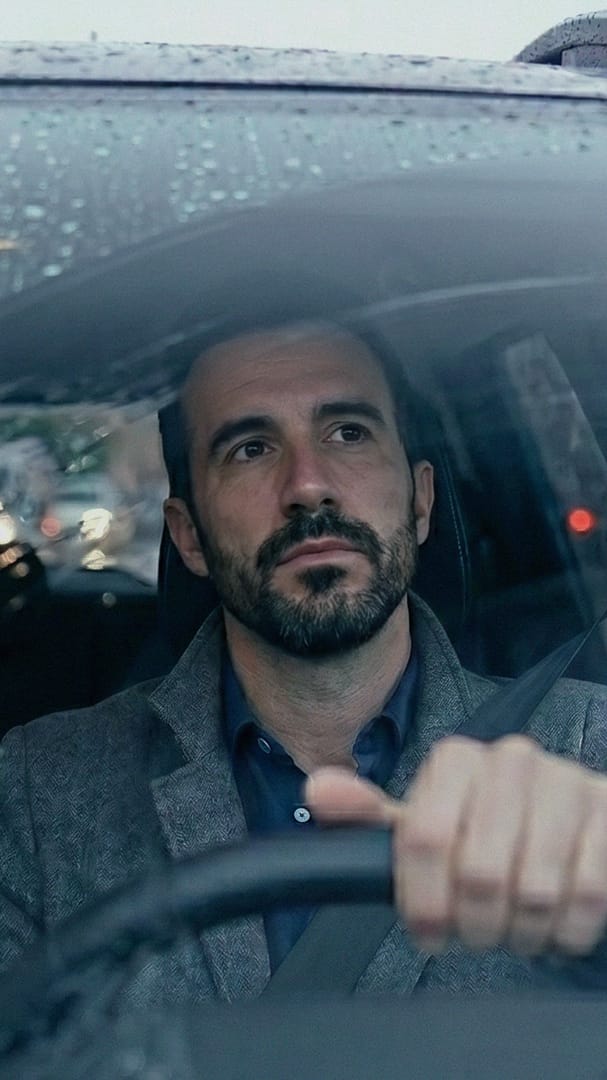
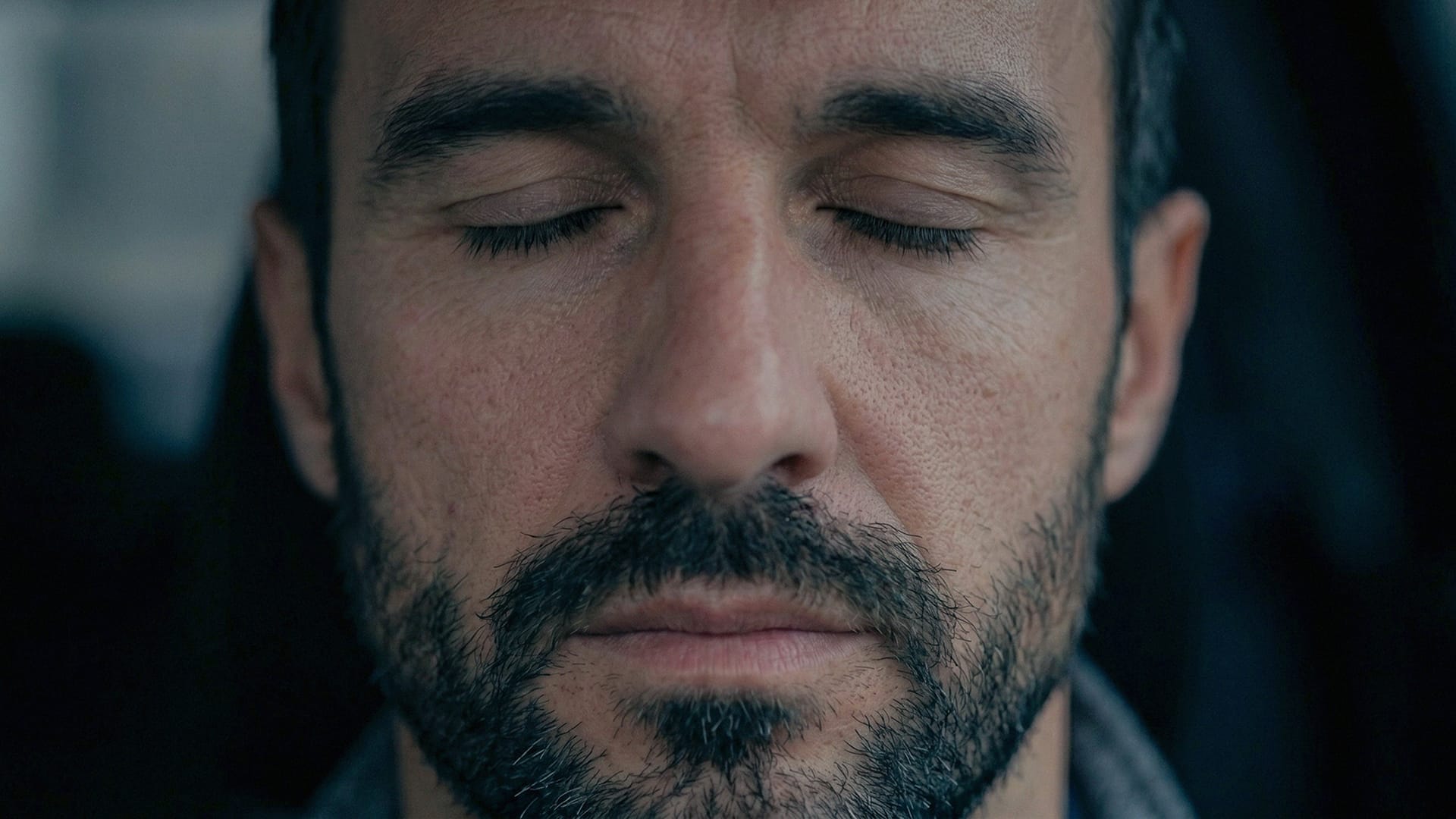
In LIVE BETTER we didn’t start by showing a home.
We started with the person who was supposed to buy it.
With how they lived.
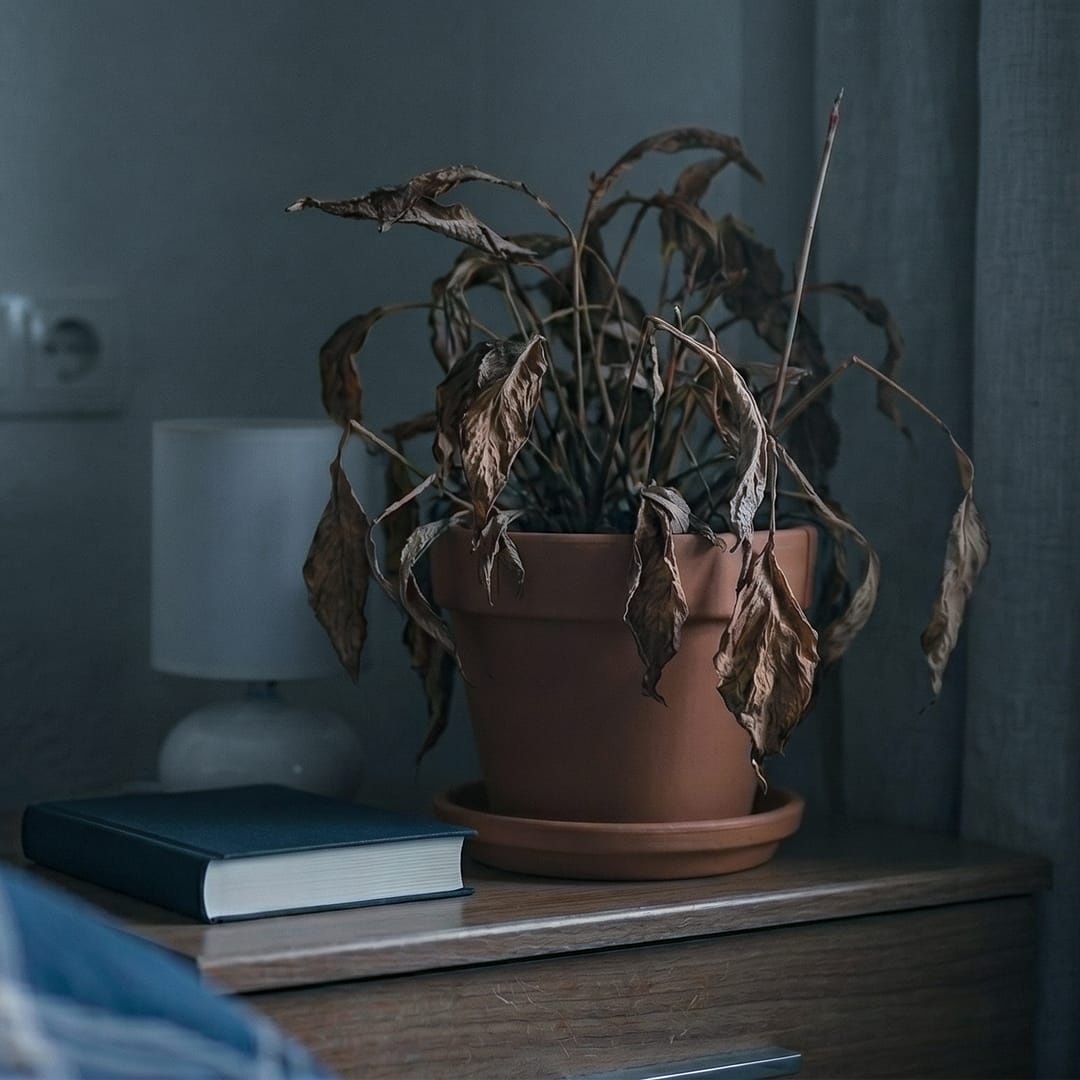
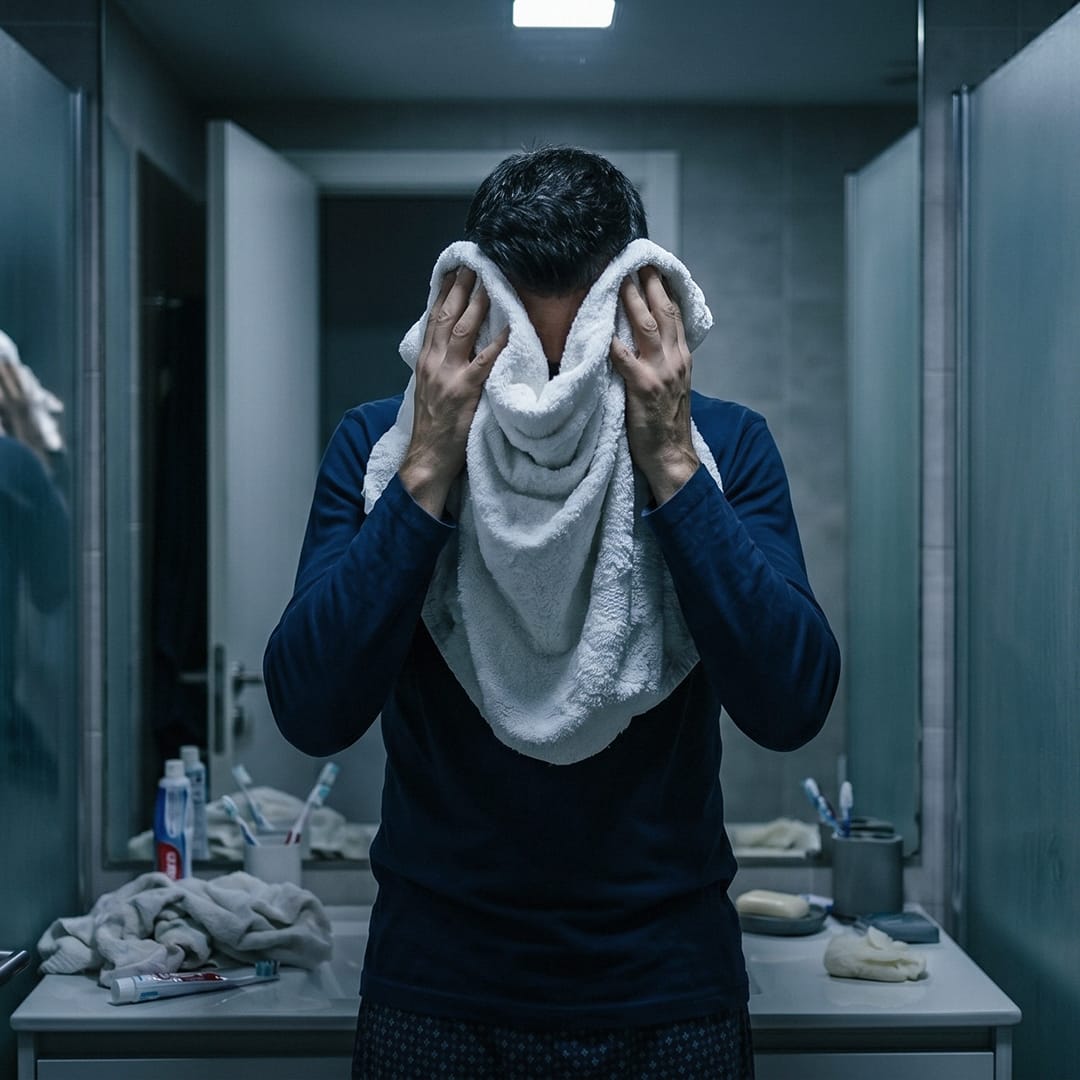
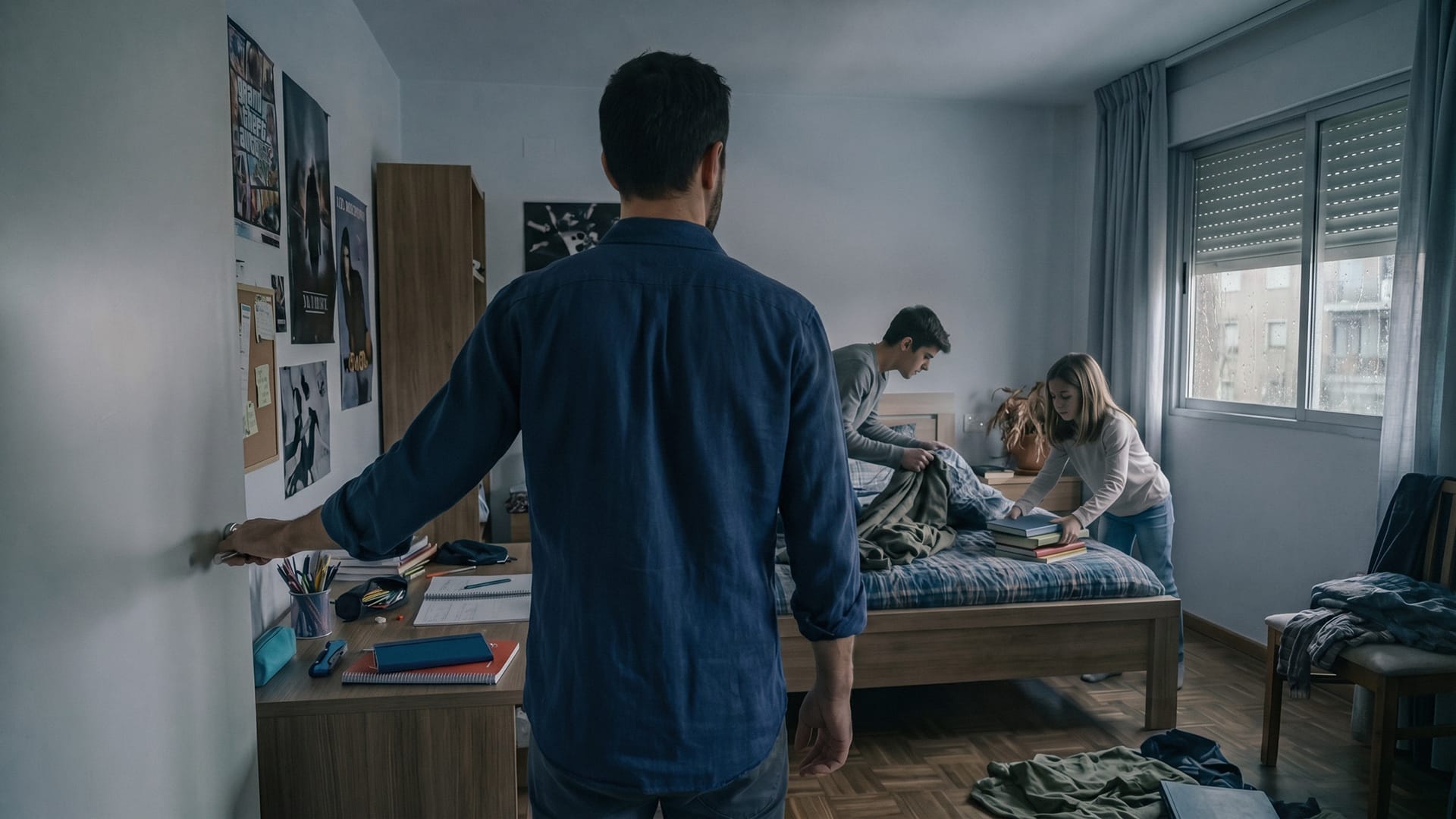
With what bothered them about that life.
With what they wanted to change.
And we built a story so that, while watching it, they could recognize themselves.
We didn’t want them to think:
“What a beautiful apartment.” We wanted to get there earlier.
To the moment when they think:
“That’s my life.” Only then does the development come in.
And when it comes in, it no longer appears naked.
It appears as the chance to leave behind a situation we’ve just made visible.
That’s the difference. And the mechanism doesn’t depend on how much money the buyer has.
A family with a mid-range budget will have certain problems and certain aspirations.
Someone buying a four-million home will have different ones.
But they have them too.
Our job is to find out which ones matter and build the communication from there.
See the full project here
AN HONEST WARNING
Here we stop obsessing over whether the video lasts two, four or five minutes.
If there’s a story worth following, time is perceived differently.
The production is also larger and demands more continuity between pieces, characters and narrative moments.
The commercial reference starts at 36 images and a video of around 4 minutes, although the story rules over the number.
I’m not going to tell you this guarantees selling faster or selling at a higher price.
That wouldn’t be serious.
But it is the level where we push furthest every variable we can work on:
attention, identification, desire, perceived value and predisposition towards the development.
Neither of the other two levels goes as deep into them.
The story doesn’t end when we stop the film.
In LIVE BETTER the same characters appear at different moments because everything belongs to the same story: the one that starts with something the buyer wants to change and ends by showing them a different way to live.
But there’s an important condition. Very often that person will see a single image, outside the video and without knowing any of the above.
That’s why each image also has to work on its own:
make the development attractive, defend its value and make people want to be part of that life.
Some of the images of the current situation were used to establish the current pain with images too.
And then, yes, only then, came the moment to show the reward: the development.
See the full project here
YOU AVOID
Relying solely on the development being beautiful, having good views or a big terrace to spark interest.
WE STRENGTHEN
Desire and perceived value. First we make visible what the buyer wants to change.
Then the development appears as a possible reward.
Its strengths stop being a list of features and start making sense to that person.
The home is worth more in their head because they understand better what could change in their life.
YOU GET
An audiovisual story built specifically for that buyer and that development, with images and video connected by a single sales idea.
Scope reference:
36 still images, approximately
4 minutes of cinematic video, dedicated social media clips and production priority.
If the story demands a different scale,
it’s defined before producing.
When the story is well built, the development stops appearing as a list of strengths and starts to feel like a concrete possibility for that person.
At this stage, we stop obsessing over whether the video lasts two, four, or five minutes.
If there is a story worth following, the perception of time changes.
The production process is also more extensive, requiring greater continuity across the various elements, characters, and narrative moments.
The standard package starts with 36 images and a video lasting around four minutes, though the story itself dictates the final scope.
I won’t claim that this guarantees faster sales or higher prices.
That wouldn’t be professional.
However, this is the level where we push the variables we can influence to their absolute limit:
attention, identification, desire, perceived value, and receptiveness to the promotion.
None of the other two levels delves as deeply into these aspects.
When the story is well built, the development stops appearing as a list of strengths and starts to feel like a concrete possibility for that person.
First we decide which level your development needs.
Then we look at how we make it visible.
First we decide which level
your development needs.
Then we look at
how we make it visible.
Video, image, 360°, floor plans, drone or social media pieces.
Each tool does a different job.
The point isn’t to use all of them, but to know which ones the development needs and what for.
A video is more
than images in motion.
A video is more
than images in motion.
Buying a home off-plan takes quite a bit of imagination.
We give the buyer floor plans, square meters, layouts, specifications, dates, orientations and a pile of information that feels normal to us because we work with it every day.
For them, not necessarily.
And we’re asking them to make one of the biggest financial decisions of their life about something that doesn’t exist yet.
It doesn’t seem like the best situation to add more uncertainty to.
Video has a huge advantage.
It turns all that information into something the buyer has understood their whole life:
a film.
They no longer need to interpret a floor plan to imagine how the living room and the terrace connect.
They can see it.
They don’t need to imagine what happens when they step out into the garden.
They can walk through it.
They don’t need to mentally reconstruct what the views will be like.
We show them.
That’s reassuring.
It makes something that doesn’t exist yet more understandable, closer and a good deal less abstract.
But the real leap comes later.
A good video shouldn’t stop at getting the buyer to understand the home.
It has to make them forget, for a few minutes, that they’re watching a representation and start imagining themselves inside.
Living there.
Having breakfast.
Coming home.
Looking out of that window.
That’s the job of the video.
See more VIDEOS here
An image has very little time
to do its job.
An image has very little time
to do its job.
Very little.
Most visual information reaches us at an absurd speed.
Phone.
Scroll.
One image.
The next.
Another development.
Another terrace.
Another living room.
If yours doesn’t manage to stop the right person, all the effort behind it may be worth very little.
That’s why defining the ideal buyer isn’t a theoretical exercise.
It lets us stop firing images into the air hoping one of them hits.
We can aim.
We know who we want to stop.
What aesthetic they recognize.
What level of decoration they expect.
What details they read as quality.
What they desire.
And what can make them think, for one second:
“Wait. I’m interested in this.”
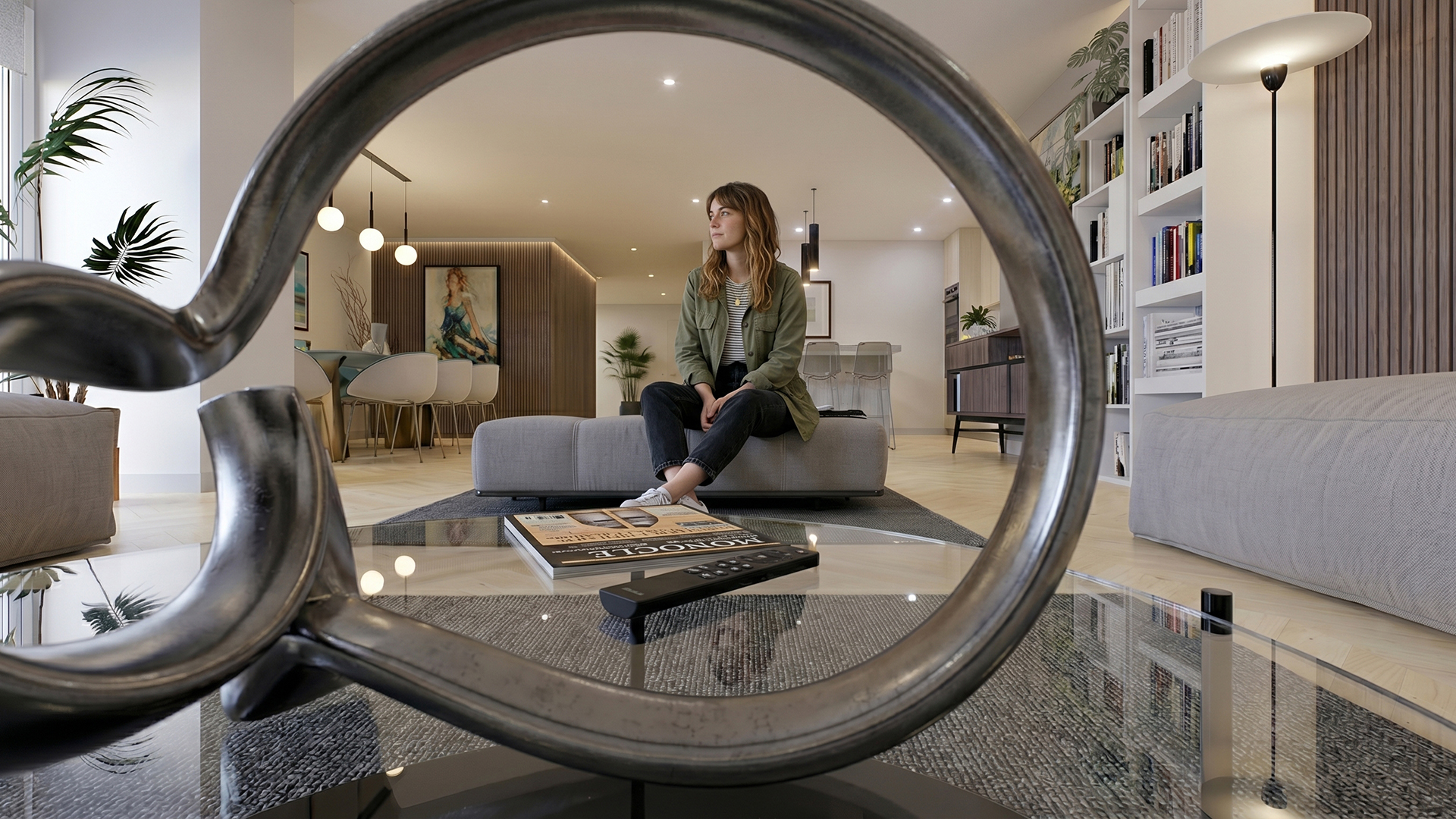
Of course the image has to be well made.
It needs composition.
It has to be realistic.
The decoration has to match the buyer’s level.
The lighting has to provoke.
The materials have to look believable.
And the atmosphere has to make a space that doesn’t exist yet look like somewhere you’d want to be.
Technique is essential.
But it’s the floor.
The real work starts when we know who we’re making the image for.




See more IMAGES here
In a buyer’s heart there’s only room for one home.
In a buyer’s heart there’s only room for one home.
Understanding the development is taken for granted.
If someone is interested enough, sooner or later they’ll find out how many square meters it has, where the master bedroom is or how the terrace is laid out.
Our work should aim for quite a bit more.
We want there to be a moment when they think:
“This one’s mine.”
And their urge to keep looking at other developments starts to fade.
If, on top of that, we’ve managed to make them perceive enough value to defend the price better,
then we’ve hit the jackpot.
If the materials are good, they have to look good.
If the terrace is huge, the buyer has to feel that size.
If the views justify part of the price, they can’t appear timidly in the background of an image.
If privacy, light or the surroundings are reasons to buy, they have to be made visible.
We can’t ask the buyer to do our job.
There’s something very powerful in a good image:
it leaves room for the buyer to complete the story.
They start imagining their furniture.
Their kids.
Their dinners.
The way they’d use the terrace.
Their life.
And at that moment, very often, the best thing a sales agent can do is not interrupt.
If the image has hit what that person has in mind, they don’t need someone to explain it again in words.
If marketing talks about quality and the images look cheap, we have a problem.
If the sales agent insists on spaciousness and the video makes the spaces look small, we have another one.
If we’re selling extraordinary views and barely show them, we’re wasting one of the arguments that should help us defend the price.
What you say and what you show have to match.
Not for aesthetic reasons.
For credibility.
Just because something worked on the previous development doesn’t mean it’ll work on this one.
The project has changed.
The buyer has changed.
The competition has changed.
The price has changed.
And the reasons someone will choose this home have probably changed too.
That’s why we don’t work like a factory.
We prefer to think of GAYARRE as a tailor’s shop.
The suit is made for this development and this buyer.
Not for the one who came before.
There are tools that help a lot when they’re used for a reason.
There are tools that help a lot when they’re used for a reason.
And that add practically nothing when they’re used because “we always do one”.
WHEN DISTANCE DEMANDS TRUST.
A foreign buyer or someone hundreds of miles away can’t walk into the home.
A 360° tour is the closest thing to opening the door and saying:
“Come in. Look wherever you like.”
They decide where to stop.
Where to turn.
What they want to check.
That freedom conveys a trust that’s hard to achieve with a still image, and different even from a video, where we always decide what they should look at.
If a significant share of your buyers are far away, it makes a lot of sense to use it.
SO NOBODY NEEDS TO KNOW ARCHITECTURE TO UNDERSTAND THEIR FUTURE HOME.
A technical drawing can be crystal clear to an architect and a puzzle to the person who’s going to pay for the home.
Especially when there are complex layouts, double-height spaces, unobvious circulation routes or simply doubts as basic as which way a door opens.
A good sales floor plan, almost like looking down into a dollhouse, removes a good part of that effort.
The buyer sees the rooms, the furniture, the circulation and the relationship between the spaces.
And they get it.
No technical drawing exam required.
IF THE SURROUNDINGS SELL,
THEY HAVE TO BE SHOWN.
There are developments where part of the value lies outside the plot.
The sea.
The landscape.
How close the beach is.
The relationship with the city.
The views.
In those cases the drone is an extraordinary tool because it shows two things at once:
what you’ll see from the development and where the development really sits within those surroundings.
That said.
If the location works against you, it may not be the best moment to start flying.
A tool only makes sense if it helps.
A PHONE IS NOT A SMALL HORIZONTAL SCREEN
The main video is usually designed for a horizontal screen.
Television.
Computer.
Website.
But the phone plays by other rules.
If we take a composition designed for horizontal and simply crop the sides, it often looks like half the film is missing.
Because it is.
In Level 3 we can prepare dedicated vertical clips, rethinking framing, editing and pace so they really work on social media.
Not as a crop.
As a piece designed for that medium.
First we understand.
Then we produce.
First we understand.
Then we produce.
1
You tell us what development you have in hand.
What stage it’s at.
When you want to go to market.
What material exists.
What worries you.
We ask a lot of questions.
And if we think we can’t help you, we tell you.
2
We propose the level and the scope we believe makes sense for your development.
We also tell you what we wouldn’t do.
The proposal has to make clear what we’re going to produce, what each piece is for and what it costs. No extras thrown in for the sake of it.
3
We define the ideal buyer.
Their reasons to buy.
What we need to make visible.
What takes priority.
And what isn’t worth spending time or budget on.
4
Image, video and all the other resources work under a single direction.
With a team that knows, from the start, what each piece is trying to achieve.
5
This is where we pin on our 98% medal.
98%
Over 37 years, 98% of our jobs have been delivered on the agreed date.
The remaining 2% were held up by missing information needed to finish the project.
That’s why we’re quite a pain at the beginning.
We ask for documentation.
We ask questions.
We confirm.
We set dates.
It may seem excessive.
There’s a very simple reason:
when the time comes to launch your sales campaign,
we don’t want to be the ones holding it up.


A few doubts worth clearing up before we talk.
A few doubts worth clearing up before we talk.
Not necessarily.
That’s precisely what Level 1 is for.
If the images have a usable foundation, we can work directly on them, radically improve their finish and create new pieces using post-production and artificial intelligence.
Even video.
Without having to re-model the entire development in 3D.
First, we’ll take a look at the material you have.
Then we’ll know how far we can take it.
Before placing the order.
That’s probably the best time.
When the project is sufficiently defined, you already have a launch date in sight, and you haven’t yet decided what to produce.
That’s when we can think first and spend later.
Much better than doing it the other way round.
No.
Level 3 is about commercial ambition, not the price tag.
It may make sense for a mid-range promotion that needs to be marketed very quickly, and for a four-million-euro promotion where perceived value is critical.
The buyer will be different.
Their problems will be different.
The story will be different too.
The mechanism is the same: first get them to recognise the promotion, and then see it in a different light.
You can find plenty of companies that will produce four renderings for you.
There’s nothing wrong with that.
But we’ve decided to work differently.
Our main aim isn’t to sell images individually.
We aim to solve a communication and marketing problem, and we understand that to do this properly, we need to work with images and video within one of our three service levels.
If all you really need are just four renderings and nothing else, there may be options more suited to your needs than GAYARRE.
Because creating an image is becoming cheaper.
Choosing the wrong image can still be extremely expensive.
AI can produce, modify, animate and surprise.
We use it too.
But the important question remains the same:
what are you asking it to do, and why?
The tool comes second.
First, you need to know who the buyer is, what’s relevant to them, how we should make them feel, and what part of the promotion deserves that space.
AI makes the ‘click’ cheaper.
It doesn’t replace judgement.
Not sure where to start?
Not sure where to start?
By now you have an idea of how we work.
To know what I’d do in your specific case, we need to talk about your development.
No rush.
You tell me what you have in hand, where you are, when you want to start selling and what worries you.
I’ll ask you questions.
We’ll see what I’d do in your case.
What I wouldn’t do.
Which level might make sense for your specific development.
And if, after talking, I think GAYARRE can’t add enough value to your project, I’ll tell you that too.
You don’t need to decide anything beforehand.
Let’s talk first. Then we’ll draw conclusions.